
You may also enjoy:
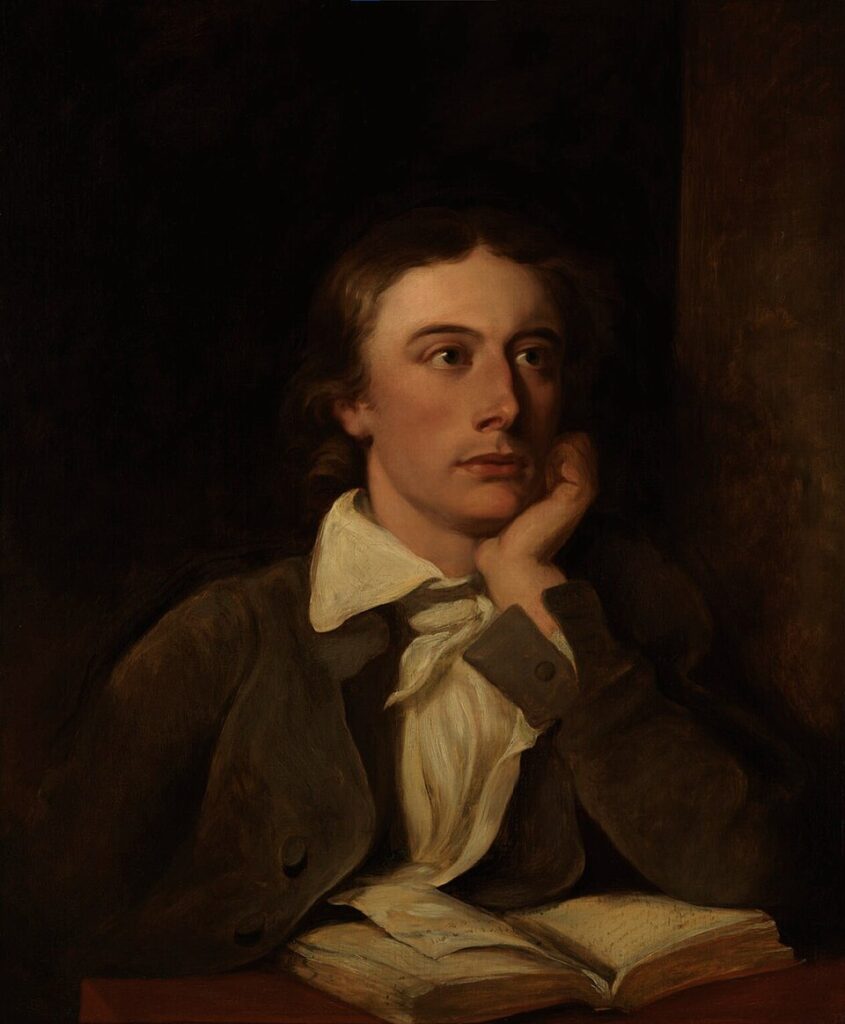
John Keats (31 October 1795 – 23 February 1821) was an English Romantic poet known for his rich imagery, sensual language, and profound meditations on beauty, mortality, and transience. Though he died young at just twenty-five, Keats produced some of the most celebrated poetry in the English language. His work often explores the tension between fleeting life and eternal beauty, making him one of the defining voices of Romanticism.
Born: 31 October 1795, London, England
Died: 23 February 1821, Rome, Papal States
Nationality: English
Main themes:
• Beauty and transience
• Mortality and death
• Nature and the senses
• Love and longing
• Art and permanence
• Imagination and escape
Why Read John Keats
John Keats’s poetry remains beloved for its beauty, emotional richness, and vivid sensory detail. His poems often dwell on impermanence, asking how beauty can endure in a world shaped by time and loss.
“Ode to a Nightingale” (excerpt)
One of Keats’s greatest poems, exploring mortality, beauty, and the longing to escape suffering.
My heart aches, and a drowsy numbness pains
My sense, as though of hemlock I had drunk,
Or emptied some dull opiate to the drains
One minute past, and Lethe-wards had sunk:
‘Tis not through envy of thy happy lot,
But being too happy in thine happiness,—
That thou, light-winged Dryad of the trees,
In some melodious plot
Of beechen green, and shadows numberless,
Singest of summer in full-throated ease.
—
“Ode on a Grecian Urn” (excerpt)
A famous meditation on art, permanence, and the frozen beauty of time.
Thou still unravish’d bride of quietness,
Thou foster-child of silence and slow time,
Sylvan historian, who canst thus express
A flowery tale more sweetly than our rhyme:
Heard melodies are sweet, but those unheard
Are sweeter;
Beauty is truth, truth beauty,—that is all
Ye know on earth, and all ye need to know.
—
“Bright Star”
One of Keats’s most famous love poems, longing for permanence in love and beauty.
Bright star, would I were steadfast as thou art—
Not in lone splendour hung aloft the night
And watching, with eternal lids apart,
Like nature’s patient, sleepless Eremite,
Still, still to hear her tender-taken breath,
And so live ever—or else swoon to death.
—
“To Autumn”
Often considered one of the greatest nature poems in English, celebrating ripeness, beauty, and seasonal change.
Season of mists and mellow fruitfulness,
Close bosom-friend of the maturing sun;
Conspiring with him how to load and bless
With fruit the vines that round the thatch-eves run;
To bend with apples the moss’d cottage-trees,
And fill all fruit with ripeness to the core.
—
“La Belle Dame sans Merci” (excerpt)
A haunting and dreamlike poem of love, enchantment, and ruin.
O what can ail thee, knight-at-arms,
Alone and palely loitering?
The sedge has wither’d from the lake,
And no birds sing.
I met a lady in the meads,
Full beautiful—a faery’s child,
Her hair was long, her foot was light,
And her eyes were wild.
—
“When I Have Fears That I May Cease to Be”
A deeply personal poem about ambition, mortality, and unfinished dreams.
When I have fears that I may cease to be
Before my pen has glean’d my teeming brain,
Before high-piled books, in charactery,
Hold like rich garners the full-ripen’d grain;
Then on the shore
Of the wide world I stand alone, and think
Till Love and Fame to nothingness do sink.
—
“On First Looking into Chapman’s Homer”
A poem of wonder, discovery, and the overwhelming power of literature.
Much have I travell’d in the realms of gold,
And many goodly states and kingdoms seen;
Round many western islands have I been
Which bards in fealty to Apollo hold.
Then felt I like some watcher of the skies
When a new planet swims into his ken;
Or like stout Cortez when with eagle eyes
He star’d at the Pacific.
How to Start Reading John Keats
For beauty and mortality, begin with “Ode to a Nightingale.”
For art and permanence, read “Ode on a Grecian Urn.”
For love and longing, begin with “Bright Star.”
For nature and seasonal beauty, explore “To Autumn.”
For Keats’s darker and more gothic side, read “La Belle Dame sans Merci.”
Final Thoughts
John Keats’s poetry endures because it captures beauty at the very moment it begins to fade. Through love, nature, art, and mortality, his poems continue to remind readers of the fragile brilliance of human life.
You might enjoy: