
You may also enjoy:
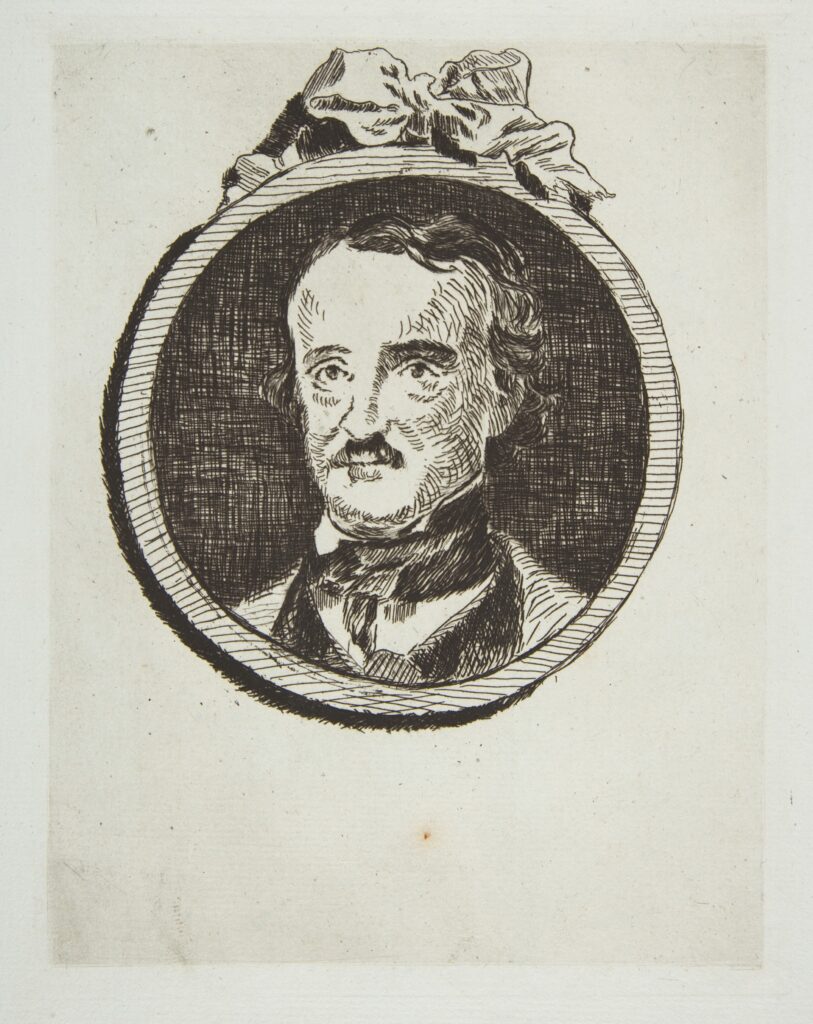
Edgar Allan Poe (19 January 1809 – 7 October 1849) was an American poet, writer, and literary critic best known for his dark romanticism, gothic imagination, and psychological intensity. Often associated with horror and mystery, Poe’s poetry explores death, beauty, grief, memory, madness, and lost love. His haunting imagery and musical language helped shape both American poetry and gothic literature.
Born: 19 January 1809, Boston, Massachusetts, United States
Died: 7 October 1849, Baltimore, Maryland, United States
Nationality: American
Main themes:
• Death and mourning
• Lost love
• Beauty and memory
• Madness and obsession
• Identity and isolation
• Time and mortality
Why Read Edgar Allan Poe
Edgar Allan Poe’s poetry remains unforgettable for its atmosphere, emotional intensity, and haunting musicality. His poems dwell on grief, longing, and mystery, creating some of the most iconic and unsettling images in literature.
“The Raven” (excerpt)
Poe’s most famous poem, a masterpiece of grief, obsession, and haunting repetition.
Once upon a midnight dreary, while I pondered, weak and weary,
Over many a quaint and curious volume of forgotten lore—
While I nodded, nearly napping, suddenly there came a tapping,
As of some one gently rapping, rapping at my chamber door.
Then this ebony bird beguiling my sad fancy into smiling,
By the grave and stern decorum of the countenance it wore,
Quoth the Raven “Nevermore.”
—
“Annabel Lee”
A haunting love poem about devotion that endures beyond death.
It was many and many a year ago,
In a kingdom by the sea,
That a maiden there lived whom you may know
By the name of Annabel Lee;
And this maiden she lived with no other thought
Than to love and be loved by me.
I was a child and she was a child,
In this kingdom by the sea,
But we loved with a love that was more than love—
I and my Annabel Lee—
With a love that the wingèd seraphs of Heaven
Coveted her and me.
And this was the reason that, long ago,
In this kingdom by the sea,
A wind blew out of a cloud, chilling
My beautiful Annabel Lee;
So that her highborn kinsmen came
And bore her away from me,
To shut her up in a sepulchre
In this kingdom by the sea.
The angels, not half so happy in Heaven,
Went envying her and me—
Yes!—that was the reason (as all men know,
In this kingdom by the sea)
That the wind came out of the cloud by night,
Chilling and killing my Annabel Lee.
But our love it was stronger by far than the love
Of those who were older than we—
Of many far wiser than we—
And neither the angels in Heaven above,
Nor the demons down under the sea,
Can ever dissever my soul from the soul
Of the beautiful Annabel Lee;
For the moon never beams, without bringing me dreams
Of the beautiful Annabel Lee;
And the stars never rise, but I feel the bright eyes
Of the beautiful Annabel Lee;
And so, all the night-tide, I lie down by the side
Of my darling—my darling—my life and my bride,
In her sepulchre there by the sea—
In her tomb by the sounding sea.
—
“A Dream Within a Dream”
A philosophical poem questioning reality, time, and loss.
Take this kiss upon the brow!
And, in parting from you now,
Thus much let me avow—
You are not wrong, who deem
That my days have been a dream;
Yet if hope has flown away
In a night, or in a day,
In a vision, or in none,
Is it therefore the less gone?
All that we see or seem
Is but a dream within a dream.
—
“Alone”
A deeply personal poem about isolation, difference, and identity.
From childhood’s hour I have not been
As others were—I have not seen
As others saw—I could not bring
My passions from a common spring—
From the same source I have not taken
My sorrow; I could not awaken
My heart to joy at the same tone;
And all I lov’d—I lov’d alone.
—
“To Helen”
One of Poe’s most lyrical poems, celebrating beauty, grace, and idealized love.
Helen, thy beauty is to me
Like those Nicéan barks of yore,
That gently, o’er a perfumed sea,
The weary, way-worn wanderer bore
To his own native shore.
On desperate seas long wont to roam,
Thy hyacinth hair, thy classic face,
Thy Naiad airs have brought me home.
—
“The Bells” (excerpt)
A musical and hypnotic poem that captures the passage from joy to terror.
Hear the sledges with the bells—
Silver bells!
What a world of merriment their melody foretells!
Hear the loud alarum bells—
Brazen bells!
What a tale of terror, now, their turbulency tells!
—
“To My Mother”
A tender poem honoring maternal love, devotion, and emotional refuge.
Because I feel that, in the Heavens above,
The angels, whispering to one another,
Can find, among their burning terms of love,
None so devotional as that of “Mother,”
Therefore by that dear name I long have called you—
You who are more than mother unto me.
How to Start Reading Edgar Allan Poe
For gothic atmosphere and grief, begin with “The Raven.”
For love and loss, read “Annabel Lee.”
For existential reflection, begin with “A Dream Within a Dream.”
For identity and emotional isolation, explore “Alone.”
For Poe’s musical and rhythmic brilliance, read “The Bells.”
Final Thoughts
Edgar Allan Poe’s poetry endures because it captures grief, beauty, and darkness with unmatched intensity. Through haunting rhythms and unforgettable imagery, his poems continue to speak to love, loss, and the mysteries of the human mind.
You might enjoy: