
Introduction
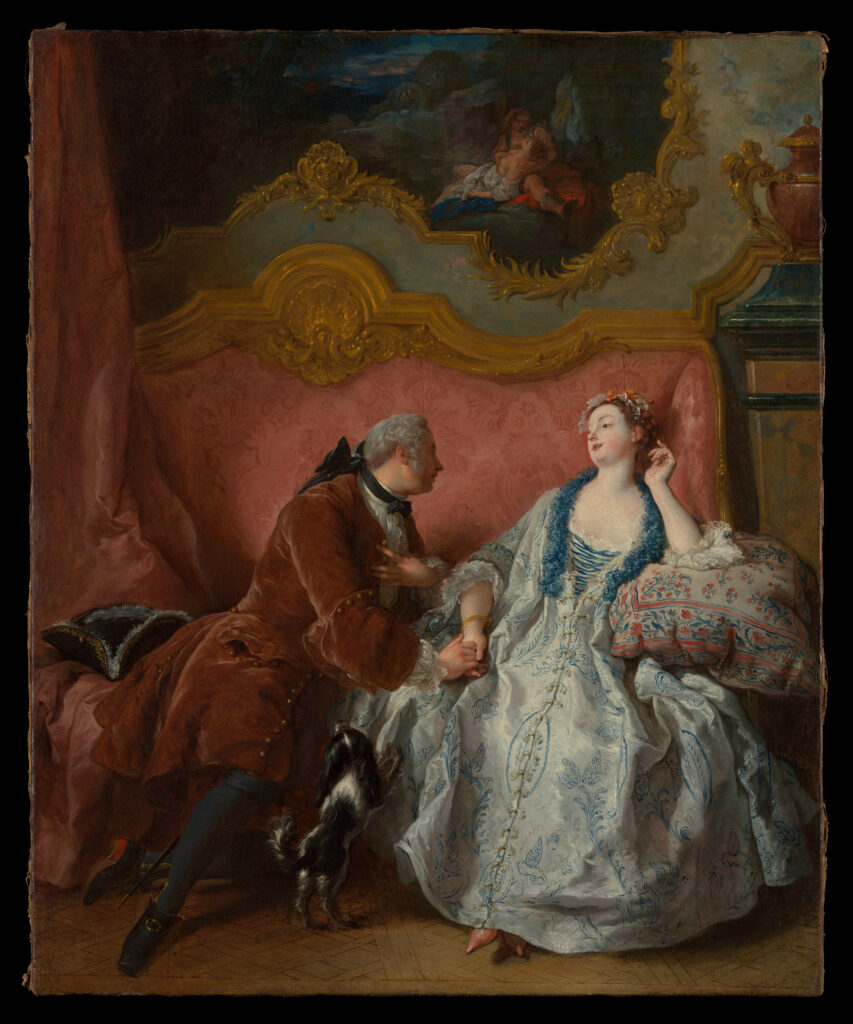
- Love has inspired poets for centuries. From passionate romance to spiritual devotion and enduring companionship, love remains one of poetry’s most timeless themes. These famous poems about love capture longing, admiration, heartbreak, and devotion across generations.
Why Poets Write About Love
You may also enjoy:
- Love speaks to universal human experience. Whether joyful or tragic, romantic or divine, it gives poets a powerful subject through which to explore emotion, identity, and meaning.
Romantic Love
Sonnet 18 (“Shall I compare thee to a summer’s day?”) — William Shakespeare
- Celebrates beauty and suggests that poetry can preserve love beyond time.
Shall I compare thee to a summer’s day?
Thou art more lovely and more temperate:
Rough winds do shake the darling buds of May,
And summer’s lease hath all too short a date;
Sometime too hot the eye of heaven shines,
And often is his gold complexion dimm’d;
And every fair from fair sometime declines,
By chance or nature’s changing course untrimm’d;
But thy eternal summer shall not fade,
Nor lose possession of that fair thou ow’st;
Nor shall death brag thou wander’st in his shade,
When in eternal lines to time thou grow’st:
So long as men can breathe or eyes can see,
So long lives this, and this gives life to thee.
How Do I Love Thee? (Sonnet 43) — Elizabeth Barrett Browning
- Expresses deep, unwavering devotion through repetition and intensity.
How do I love thee? Let me count the ways.
I love thee to the depth and breadth and height
My soul can reach, when feeling out of sight
For the ends of being and ideal grace.
I love thee to the level of every day’s
Most quiet need, by sun and candle-light.
I love thee freely, as men strive for right;
I love thee purely, as they turn from praise.
I love thee with the passion put to use
In my old griefs, and with my childhood’s faith.
I love thee with a love I seemed to lose
With my lost saints. I love thee with the breath,
Smiles, tears, of all my life; and, if God choose,
I shall but love thee better after death.
She Walks in Beauty — Lord Byron
- Admiration of outer beauty intertwined with inner purity and grace.
She walks in beauty, like the night
Of cloudless climes and starry skies;
And all that’s best of dark and bright
Meet in her aspect and her eyes;
Thus mellowed to that tender light
Which heaven to gaudy day denies.
One shade the more, one ray the less,
Had half impaired the nameless grace
Which waves in every raven tress,
Or softly lightens o’er her face;
Where thoughts serenely sweet express,
How pure, how dear their dwelling-place.
And on that cheek, and o’er that brow,
So soft, so calm, yet eloquent,
The smiles that win, the tints that glow,
But tell of days in goodness spent,
A mind at peace with all below,
A heart whose love is innocent!
Devoted and Spiritual Love
A Valediction: Forbidding Mourning — John Donne
- Portrays love as spiritual and unbreakable, even across distance.
As virtuous men pass mildly away,
And whisper to their souls to go,
Whilst some of their sad friends do say
The breath goes now, and some say, No:
So let us melt, and make no noise,
No tear-floods, nor sigh-tempests move;
‘Twere profanation of our joys
To tell the laity our love.
Moving of th’ earth brings harms and fears,
Men reckon what it did, and meant;
But trepidation of the spheres,
Though greater far, is innocent.
Dull sublunary lovers’ love
(Whose soul is sense) cannot admit
Absence, because it doth remove
Those things which elemented it.
But we by a love so much refined,
That our selves know not what it is,
Inter-assured of the mind,
Care less, eyes, lips, and hands to miss.
Our two souls therefore, which are one,
Though I must go, endure not yet
A breach, but an expansion,
Like gold to airy thinness beat.
If they be two, they are two so
As stiff twin compasses are two;
Thy soul, the fixed foot, makes no show
To move, but doth, if the other do.
And though it in the center sit,
Yet when the other far doth roam,
It leans and hearkens after it,
And grows erect, as that comes home.
Such wilt thou be to me, who must,
Like th’ other foot, obliquely run;
Thy firmness makes my circle just,
And makes me end where I begun.
Annabel Lee — Edgar Allan Poe
- A haunting meditation on eternal love that transcends death.
It was many and many a year ago,
In a kingdom by the sea,
That a maiden there lived whom you may know
By the name of Annabel Lee;
And this maiden she lived with no other thought
Than to love and be loved by me.
I was a child and she was a child,
In this kingdom by the sea,
But we loved with a love that was more than love—
I and my Annabel Lee—
With a love that the wingèd seraphs of Heaven
Coveted her and me.
And this was the reason that, long ago,
In this kingdom by the sea,
A wind blew out of a cloud, chilling
My beautiful Annabel Lee;
So that her highborn kinsmen came
And bore her away from me,
To shut her up in a sepulchre
In this kingdom by the sea.
The angels, not half so happy in Heaven,
Went envying her and me—
Yes!—that was the reason (as all men know,
In this kingdom by the sea)
That the wind came out of the cloud by night,
Chilling and killing my Annabel Lee.
But our love it was stronger by far than the love
Of those who were older than we—
Of many far wiser than we—
And neither the angels in Heaven above
Nor the demons down under the sea
Can ever dissever my soul from the soul
Of the beautiful Annabel Lee;
For the moon never beams, without bringing me dreams
Of the beautiful Annabel Lee;
And the stars never rise, but I feel the bright eyes
Of the beautiful Annabel Lee;
And so, all the night-tide, I lie down by the side
Of my darling—my darling—my life and my bride,
In her sepulchre there by the sea—
In her tomb by the sounding sea.
Love and Nature
I Wandered Lonely as a Cloud — William Wordsworth
- Though often read as a nature poem, it reflects a quiet love for beauty and memory.
I wandered lonely as a cloud
That floats on high o’er vales and hills,
When all at once I saw a crowd,
A host, of golden daffodils;
Beside the lake, beneath the trees,
Fluttering and dancing in the breeze.
Continuous as the stars that shine
And twinkle on the milky way,
They stretched in never-ending line
Along the margin of a bay:
Ten thousand saw I at a glance,
Tossing their heads in sprightly dance.
The waves beside them danced; but they
Out-did the sparkling waves in glee:
A poet could not but be gay,
In such a jocund company:
I gazed—and gazed—but little thought
What wealth the show to me had brought:
For oft, when on my couch I lie
In vacant or in pensive mood,
They flash upon that inward eye
Which is the bliss of solitude;
And then my heart with pleasure fills,
And dances with the daffodils.
To My Dear and Loving Husband — Anne Bradstreet
- One of the earliest American love poems, expressing gratitude and spiritual unity.
If ever two were one, then surely we.
If ever man were loved by wife, then thee.
If ever wife was happy in a man,
Compare with me, ye women, if you can.
I prize thy love more than whole mines of gold,
Or all the riches that the East doth hold.
My love is such that rivers cannot quench,
Nor ought but love from thee give recompense.
Thy love is such I can no way repay;
The heavens reward thee manifold, I pray.
Then while we live, in love let’s so persever,
That when we live no more, we may live ever.
Love and Loss
When You Are Old — W. B. Yeats
- Reflects on enduring love and the passage of time.
When you are old and grey and full of sleep,
And nodding by the fire, take down this book,
And slowly read, and dream of the soft look
Your eyes had once, and of their shadows deep;
How many loved your moments of glad grace,
And loved your beauty with love false or true,
But one man loved the pilgrim soul in you,
And loved the sorrows of your changing face;
And bending down beside the glowing bars,
Murmur, a little sadly, how Love fled
And paced upon the mountains overhead
And hid his face amid a crowd of stars.
Remember — Christina Rossetti
- Balances love, remembrance, and acceptance in the face of separation.
Remember me when I am gone away,
Gone far away into the silent land;
When you can no more hold me by the hand,
Nor I half turn to go yet turning stay.
Remember me when no more day by day
You tell me of our future that you plann’d:
Only remember me; you understand
It will be late to counsel then or pray.
Yet if you should forget me for a while
And afterwards remember, do not grieve:
For if the darkness and corruption leave
A vestige of the thoughts that once I had,
Better by far you should forget and smile
Than that you should remember and be sad.
How to Choose a Love Poem
- Choose romantic sonnets for classic declarations.
- Select spiritual or devotional poems for deeper reflection.
- Consider poems of loss for bittersweet or contemplative tones.
- Short poems work well for readings or quotations.
Final Thoughts
- Famous poems about love endure because love itself endures. Whether passionate, patient, joyful, or tragic, these poems remind us why love remains one of literature’s most powerful and universal themes.
You might enjoy: