
You may also enjoy:
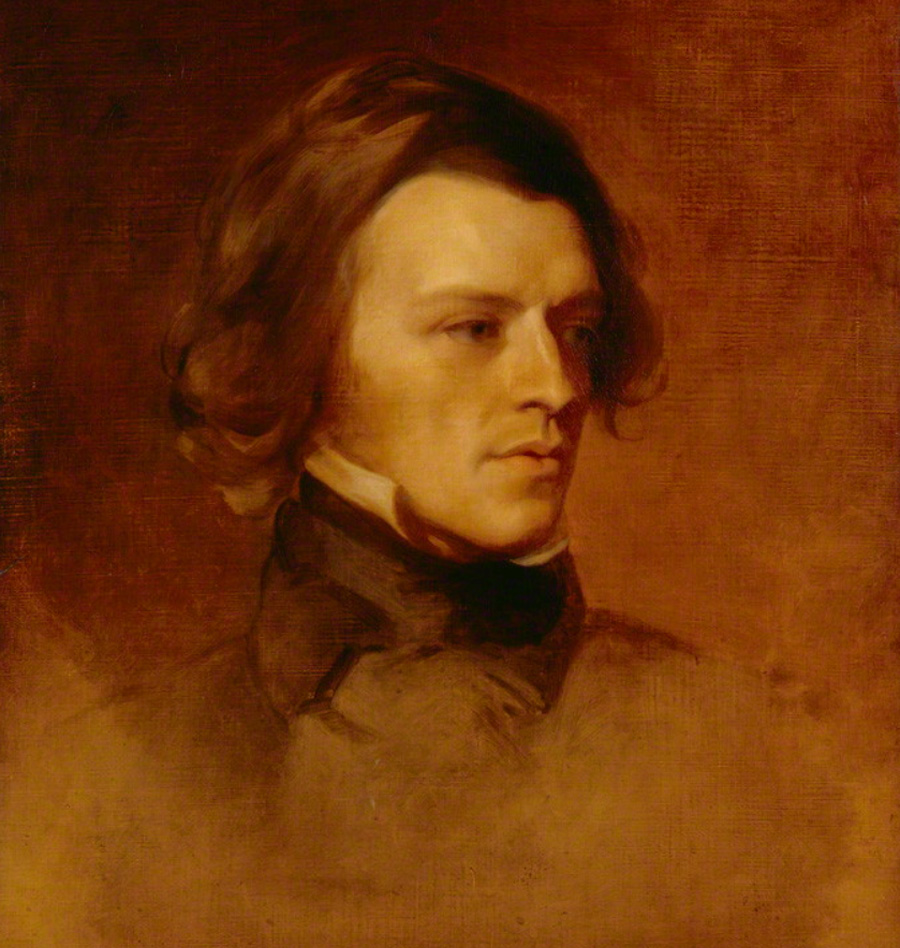
Alfred Tennyson, 1st Baron Tennyson (6 August 1809 – 6 October 1892), was an English poet and one of the defining literary voices of the Victorian age. His poetry ranges from intimate expressions of grief and memory to Arthurian legend, dramatic monologue, nature poetry, and public verse shaped by the events of his time.
Tennyson became Poet Laureate in 1850 and held the position for the rest of his life. That same year saw the publication of In Memoriam A.H.H., the long elegiac work he had developed over many years following the death of his close friend Arthur Henry Hallam. Grief, faith, doubt, memory, mortality, and the pressure of time would remain central concerns throughout Tennyson’s poetry.
Born: 6 August 1809, Somersby, Lincolnshire, England
Died: 6 October 1892, Aldworth, Haslemere, Surrey, England
Nationality: English
Main themes:
• grief and remembrance
• mortality and the passage of time
• heroism and duty
• isolation and longing
• faith and doubt
• nature and beauty
• legend and myth
Why Read Alfred, Lord Tennyson
Tennyson could be grand without losing intimacy. His poems contain charging cavalry, legendary knights, lonely towers, sea cliffs, dying light, and journeys toward unknown shores—but some of his most powerful writing begins with something as simple as missing a voice that will never be heard again.
His extraordinary ear for rhythm and sound gives even his darker poems a musical beauty. Beneath that beauty, however, Tennyson repeatedly asks difficult questions: how people live after loss, what remains when certainty disappears, and whether age, grief, or approaching death can be met without surrendering the desire to keep moving forward.
—
“The Lady of Shalott” (excerpt)
Tennyson’s Arthurian poem turns isolation, art, desire, and the distant attraction of ordinary human life into a haunting fairy-tale vision.
There she weaves by night and day
A magic web with colours gay.
She has heard a whisper say,
A curse is on her if she stay
To look down to Camelot.
She knows not what the curse may be,
And so she weaveth steadily,
And little other care hath she,
The Lady of Shalott.
And moving thro’ a mirror clear
That hangs before her all the year,
Shadows of the world appear.
There she sees the highway near
Winding down to Camelot:
There the river eddy whirls,
And there the surly village-churls,
And the red cloaks of market girls,
Pass onward from Shalott.
Sometimes a troop of damsels glad,
An abbot on an ambling pad,
Sometimes a curly shepherd-lad,
Or long-hair’d page in crimson clad,
Goes by to tower’d Camelot;
And sometimes thro’ the mirror blue
The knights come riding two and two:
She hath no loyal knight and true,
The Lady of Shalott.
But in her web she still delights
To weave the mirror’s magic sights,
For often thro’ the silent nights
A funeral, with plumes and lights,
And music, went to Camelot:
Or when the moon was overhead,
Came two young lovers lately wed;
“I am half-sick of shadows,” said
The Lady of Shalott.
—
“Ulysses” (excerpt)
An aging hero refuses a quiet ending, turning old age into a meditation on restlessness, endurance, and the desire to keep seeking what lies beyond the familiar world.
There lies the port: the vessel puffs her sail:
There gloom the dark broad seas. My mariners,
Souls that have toil’d and wrought, and thought with me—
That ever with a frolic welcome took
The thunder and the sunshine, and opposed
Free hearts, free foreheads—you and I are old;
Old age hath yet his honour and his toil;
Death closes all; but something ere the end,
Some work of noble note, may yet be done,
Not unbecoming men that strove with Gods.
The lights begin to twinkle from the rocks:
The long day wanes: the slow moon climbs: the deep
Moans round with many voices. Come, my friends,
’Tis not too late to seek a newer world.
Push off, and sitting well in order smite
The sounding furrows; for my purpose holds
To sail beyond the sunset, and the baths
Of all the western stars, until I die.
It may be that the gulfs will wash us down:
It may be we shall touch the Happy Isles,
And see the great Achilles, whom we knew.
Tho’ much is taken, much abides; and tho’
We are not now that strength which in old days
Moved earth and heaven; that which we are, we are;
One equal temper of heroic hearts,
Made weak by time and fate, but strong in will
To strive, to seek, to find, and not to yield.
—
“The Charge of the Light Brigade”
Written in response to the disastrous cavalry charge at the Battle of Balaclava, Tennyson’s pounding rhythm captures both the courage of the soldiers and the terrible cost of unquestioning duty.
Half a league, half a league,
Half a league onward,
All in the valley of Death
Rode the six hundred.
“Forward, the Light Brigade!
Charge for the guns!” he said:
Into the valley of Death
Rode the six hundred.
“Forward, the Light Brigade!”
Was there a man dismay’d?
Not tho’ the soldier knew
Some one had blunder’d:
Theirs not to make reply,
Theirs not to reason why,
Theirs but to do and die:
Into the valley of Death
Rode the six hundred.
Cannon to right of them,
Cannon to left of them,
Cannon in front of them
Volley’d and thunder’d;
Storm’d at with shot and shell,
Boldly they rode and well,
Into the jaws of Death,
Into the mouth of Hell
Rode the six hundred.
Flash’d all their sabres bare,
Flash’d as they turn’d in air
Sabring the gunners there,
Charging an army, while
All the world wonder’d:
Plunged in the battery-smoke
Right thro’ the line they broke;
Cossack and Russian
Reel’d from the sabre-stroke
Shatter’d and sunder’d.
Then they rode back, but not
Not the six hundred.
Cannon to right of them,
Cannon to left of them,
Cannon behind them
Volley’d and thunder’d;
Storm’d at with shot and shell,
While horse and hero fell,
They that had fought so well
Came thro’ the jaws of Death,
Back from the mouth of Hell,
All that was left of them,
Left of six hundred.
When can their glory fade?
O the wild charge they made!
All the world wonder’d.
Honor the charge they made!
Honor the Light Brigade,
Noble six hundred!
—
“Break, Break, Break”
One of Tennyson’s simplest and most moving poems of grief contrasts the continuing life of the world with the unbearable absence of someone loved.
Break, break, break,
On thy cold gray stones, O Sea!
And I would that my tongue could utter
The thoughts that arise in me.
O well for the fisherman’s boy,
That he shouts with his sister at play!
O well for the sailor lad,
That he sings in his boat on the bay!
And the stately ships go on
To their haven under the hill;
But O for the touch of a vanish’d hand,
And the sound of a voice that is still!
Break, break, break,
At the foot of thy crags, O Sea!
But the tender grace of a day that is dead
Will never come back to me.
—
“Crossing the Bar”
Written late in Tennyson’s life, this quiet sea voyage becomes a calm and luminous metaphor for approaching death.
Sunset and evening star,
And one clear call for me!
And may there be no moaning of the bar,
When I put out to sea,
But such a tide as moving seems asleep,
Too full for sound and foam,
When that which drew from out the boundless deep
Turns again home.
Twilight and evening bell,
And after that the dark!
And may there be no sadness of farewell,
When I embark;
For tho’ from out our bourne of Time and Place
The flood may bear me far,
I hope to see my Pilot face to face
When I have cross’d the bar.
—
“The Eagle”
In only six lines, Tennyson creates a vast landscape and captures the stillness, isolation, and sudden power of a bird poised above the sea.
He clasps the crag with crooked hands;
Close to the sun in lonely lands,
Ring’d with the azure world, he stands.
The wrinkled sea beneath him crawls;
He watches from his mountain walls,
And like a thunderbolt he falls.
—
“Tears, Idle Tears”
Memory becomes almost painfully beautiful in this lyric from The Princess, where the vanished past seems both impossibly distant and intimately present.
Tears, idle tears, I know not what they mean,
Tears from the depth of some divine despair
Rise in the heart, and gather to the eyes,
In looking on the happy Autumn-fields,
And thinking of the days that are no more.
Fresh as the first beam glittering on a sail,
That brings our friends up from the underworld,
Sad as the last which reddens over one
That sinks with all we love below the verge;
So sad, so fresh, the days that are no more.
Ah, sad and strange as in dark summer dawns
The earliest pipe of half-awaken’d birds
To dying ears, when unto dying eyes
The casement slowly grows a glimmering square;
So sad, so strange, the days that are no more.
Dear as remember’d kisses after death,
And sweet as those by hopeless fancy feign’d
On lips that are for others; deep as love,
Deep as first love, and wild with all regret;
O Death in Life, the days that are no more.
—
How to Start Reading Alfred, Lord Tennyson
If you are new to Tennyson, begin with Break, Break, Break. It is short, emotionally immediate, and shows how naturally his musical language can carry grief.
For Tennyson’s legendary and atmospheric side, try The Lady of Shalott, where medieval romance becomes a story of isolation and longing.
For poems about aging, purpose, and perseverance, read Ulysses.
If you enjoy narrative and historical poetry, The Charge of the Light Brigade shows Tennyson writing in his public voice, using rhythm to recreate the movement and violence of battle.
For mortality approached with greater peace, turn to Crossing the Bar.
For nature poetry at its most compressed, The Eagle creates an entire landscape in six lines.
If you are drawn to memory and longing, Tears, Idle Tears is one of Tennyson’s most beautiful expressions of the ache created by the passing of time.
Readers who want to go deeper into Tennyson should also explore In Memoriam A.H.H., his long meditation on grief, love, faith, doubt, and the death of Arthur Henry Hallam.
—
Final Thoughts
Alfred, Lord Tennyson wrote on an enormous scale, but the emotional center of his poetry is often surprisingly intimate. His legendary landscapes and heroic figures exist beside lost friends, remembered voices, aging bodies, fading days, and people trying to understand how life continues after certainty has disappeared.
Again and again, Tennyson returns to movement: waves breaking against stone, a boat crossing dark water, cavalry riding into battle, or an old sailor determined to seek another horizon. Even when his poems dwell on loss, they rarely remain entirely still. Something continues—memory, longing, duty, faith, or simply the stubborn human desire to move forward.
You might enjoy: