
You may also enjoy:
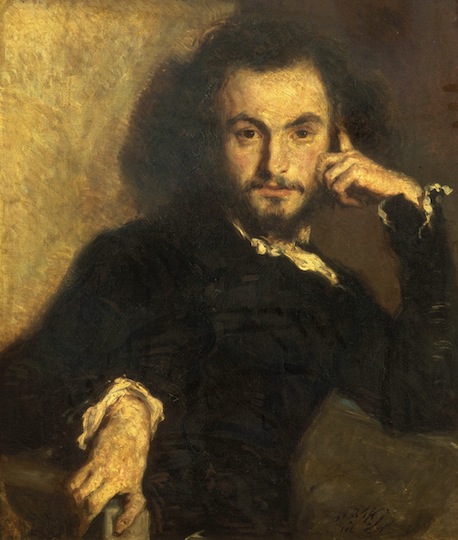
Charles Baudelaire (9 April 1821 – 31 August 1867) was a French poet, critic, and translator whose work helped shape modern poetry and Symbolism. Best known for Les Fleurs du mal (The Flowers of Evil), Baudelaire explored beauty, decay, sensuality, urban life, boredom, and spiritual conflict with a style that was both lush and unsettling. His poetry bridged Romanticism and modernism, influencing generations of writers.
Born: 9 April 1821, Paris, France
Died: 31 August 1867, Paris, France
Nationality: French
Main themes:
• Beauty and decay
• Urban life and alienation
• Desire and sensuality
• Death and corruption
• Spiritual conflict
• Ennui and existential despair
Why Read Charles Baudelaire
Charles Baudelaire’s poetry remains powerful because it finds beauty in darkness and meaning in corruption. His work transformed modern poetry by exploring desire, suffering, and the strange splendor hidden in decay.
“The Albatross”
One of Baudelaire’s most famous poems, using the image of a great bird to symbolize the poet’s isolation from ordinary society.
Often, to amuse themselves, the men of the crew
Catch albatrosses, vast birds of the seas,
That follow, indolent companions of the voyage,
The ship gliding over bitter gulfs.
Hardly have they placed them on the deck
Than these kings of the blue, awkward and ashamed,
Pitifully let their great white wings
Trail beside them like oars.
This winged voyager, how weak and awkward he!
He, lately beautiful, is comic and ugly!
One sailor teases his beak with a pipe,
Another mimics, limping, the crippled flyer.
The Poet is like this prince of the clouds,
Who haunts the storm and laughs at the archer;
Exiled on earth among mocking crowds,
His giant wings prevent him from walking.
—
“Correspondances”
A foundational Symbolist poem about hidden meanings and the secret language of the world.
Nature is a temple where living pillars
Sometimes let fall confused words;
Man passes there through forests of symbols
That watch him with familiar glances.
Like long echoes mingling in the distance
In a deep and shadowy unity,
Vast as the night and as the light,
Perfumes, sounds, and colors answer one another.
There are perfumes fresh as the flesh of children,
Soft as oboes, green as meadows,
And others, corrupt, rich, and triumphant,
Having the expansion of infinite things,
Like amber, musk, benzoin, and incense,
That sing the ecstasies of the soul and sense.
—
“Hymn to Beauty”
A provocative meditation on beauty as both divine and dangerous.
Do you come from Heaven deep or out of the abyss,
O Beauty? your gaze, infernal and divine,
Confusedly pours out benefit and crime,
And one may therefore liken you to wine.
You contain in your eye the sunset and the dawn;
You scatter perfumes like a stormy night;
Your kisses are a philtre, your mouth an amphora
That make heroes cowardly and children brave.
Whether you come from Heaven or Hell, what matter,
O Beauty! monster huge, terrifying, naive!
If your eye, your smile, your foot open for me
The door of an Infinite that I love and never knew?
From Satan or from God, what matters? Angel or Siren,
What matters, if you make—fairy with velvet eyes,
Rhythm, perfume, glimmer, O my only queen!—
The world less hideous and the moments less heavy?
—
“Spleen”
One of Baudelaire’s most powerful poems of despair, boredom, and spiritual suffocation.
When the low, heavy sky weighs like a lid
Upon the spirit groaning in its pain,
And all the horizon round us pours
A blacker day than night itself;
When earth is changed into a damp dungeon,
Where Hope, like a bat,
Goes beating against the walls
With timid wings.
When the rain stretches out its immense streaks
Imitating the bars of a vast prison,
And a silent swarm of vile spiders
Comes to spread its nets at the bottom of our brains.
Then bells leap suddenly with fury
And hurl a frightful howl toward the sky.
—
“Invitation to the Voyage”
One of Baudelaire’s most sensual and dreamlike poems, imagining an ideal world of beauty, peace, and devotion.
My child, my sister,
Think of the sweetness
Of going there to live together!
To love at leisure,
To love and die
In the land that is like you!
The misty suns
Of those cloudy skies
Have for my spirit the charms
So mysterious
Of your treacherous eyes,
Shining through their tears.
There all is order and beauty,
Luxury, calm, and pleasure.
See on those canals
Those sleeping vessels
Whose mood is vagabond;
It is to satisfy
Your slightest desire
That they come from the ends of the world.
The sunsets there
Clothe the fields,
The canals, the whole city,
With hyacinth and gold;
The world falls asleep
In a warm light.
There all is order and beauty,
Luxury, calm, and pleasure.
—
“The Enemy”
A reflective poem about time, aging, and the destruction left behind by life.
My youth was but a stormy darkened sky,
Lit now and then by brilliant suns;
Thunder and rain have made such havoc there
That in my garden little fruit remains.
Now I touch the autumn of ideas,
And must use rake and spade
To gather up anew the flooded lands
Where water has dug holes as deep as graves.
And who knows if the flowers I dream of
Will find in this washed soil
The mystic nourishment that would make them strong?
O pain! O pain! Time eats life,
And the obscure Enemy gnawing at our hearts
Grows stronger from the blood we lose.
—
“A Carcass” (excerpt)
One of Baudelaire’s most infamous poems, confronting decay, mortality, and the strange persistence of beauty.
Remember the object that we saw, my soul,
That fair summer morning so sweet:
At the bend of a path a foul carcass
On a bed strewn with stones,
The legs in air, like a shameless woman,
Burning and sweating poisons,
Opened in careless fashion
Its belly full of exhalations.
The sun shone on this rottenness,
As though to cook it to a turn,
And render back a hundredfold
To great Nature all she had joined.
And yet you will be like this filth,
This horrible corruption,
Star of my eyes, sun of my nature,
You, my angel and my passion!
How to Start Reading Charles Baudelaire
For alienation and the role of the poet, begin with “The Albatross.”
For Symbolist philosophy, read “Correspondances.”
For beauty’s darker side, explore “Hymn to Beauty.”
For despair and existential exhaustion, begin with “Spleen.”
For Baudelaire’s sensual and idealized world, read “Invitation to the Voyage.”
For his most shocking confrontation with mortality, read “A Carcass.”
Final Thoughts
Charles Baudelaire’s poetry endures because it refuses to separate beauty from darkness. Through desire, decay, longing, and despair, his work reveals the strange complexity of modern human experience and continues to influence poets around the world.
You might enjoy: