
You may also enjoy:
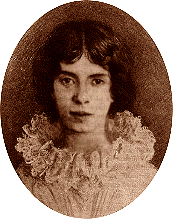
Emily Dickinson (10 December 1830 – 15 May 1886) was an American poet whose brief, intensely concentrated poems transformed ordinary subjects—birds, flowers, rooms, grief, faith—into explorations of some of life’s largest mysteries. Writing largely outside the literary world of her time, Dickinson developed an unmistakable voice: intimate, questioning, witty, and often strange. Her poems return again and again to death, hope, solitude, nature, identity, and the uncertain border between belief and doubt.
Born: 10 December 1830, Amherst, Massachusetts, United States
Died: 15 May 1886, Amherst, Massachusetts, United States
Nationality: American
Main themes:
• death and immortality
• hope and despair
• solitude and identity
• nature and observation
• grief and emotional pain
• faith and doubt
Why Read Emily Dickinson
Dickinson could fit an astonishing amount of thought into a handful of lines. Her poems rarely explain themselves; instead, they catch a feeling, image, or question and turn it until something unexpected appears. Death may arrive as a courteous carriage driver, hope becomes a small bird, and winter light carries an invisible wound. Her poems are brief enough to enter quickly but strange enough to keep unfolding long after they end.
—
“Hope is the thing with feathers”
Dickinson’s famous image of hope as a small, persistent bird makes resilience feel instinctive rather than heroic.
Hope is the thing with feathers
That perches in the soul,
And sings the tune without the words,
And never stops at all,
And sweetest in the gale is heard;
And sore must be the storm
That could abash the little bird
That kept so many warm.
I’ve heard it in the chillest land,
And on the strangest sea;
Yet, never, in extremity,
It asked a crumb of me.
—
“The Chariot”
Better known today by its opening line, “Because I could not stop for Death,” this quiet carriage ride became one of Dickinson’s most enduring visions of mortality and eternity.
Because I could not stop for Death,
He kindly stopped for me;
The carriage held but just ourselves
And Immortality.
We slowly drove, he knew no haste,
And I had put away
My labor, and my leisure too,
For his civility.
We passed the school where children played,
Their lessons scarcely done;
We passed the fields of gazing grain,
We passed the setting sun.
We paused before a house that seemed
A swelling of the ground;
The roof was scarcely visible,
The cornice but a mound.
Since then ’tis centuries; but each
Feels shorter than the day
I first surmised the horses’ heads
Were toward eternity.
—
“Dying”
Better known by its opening line, “I heard a fly buzz when I died,” this poem places an ordinary fly at the center of an intensely anticipated final moment.
I heard a fly buzz when I died;
The stillness round my form
Was like the stillness in the air
Between the heaves of storm.
The eyes beside had wrung them dry,
And breaths were gathering sure
For that last onset, when the king
Be witnessed in his power.
I willed my keepsakes, signed away
What portion of me I
Could make assignable,—and then
There interposed a fly,
With blue, uncertain, stumbling buzz,
Between the light and me;
And then the windows failed, and then
I could not see to see.
—
“I’m Nobody! Who are you?”
Playful, conspiratorial, and wonderfully sharp, this tiny poem turns anonymity into a private rebellion against public importance.
I’m nobody! Who are you?
Are you nobody, too?
Then there’s a pair of us—don’t tell!
They’d banish us, you know.
How dreary to be somebody!
How public, like a frog
To tell your name the livelong day
To an admiring bog!
—
“In the Garden”
Better known by its opening line, “A bird came down the walk,” this close observation shifts almost imperceptibly into wonder as an ordinary bird becomes something beautiful, wild, and unreachable.
A bird came down the walk:
He did not know I saw;
He bit an angle-worm in halves
And ate the fellow, raw.
And then he drank a dew
From a convenient grass,
And then hopped sidewise to the wall
To let a beetle pass.
He glanced with rapid eyes
That hurried all abroad,—
They looked like frightened beads, I thought;
He stirred his velvet head
Like one in danger; cautious,
I offered him a crumb,
And he unrolled his feathers
And rowed him softer home
Than oars divide the ocean,
Too silver for a seam,
Or butterflies, off banks of noon,
Leap, splashless, as they swim.
—
“After Great Pain”
One of Dickinson’s starkest poems about grief describes not emotional collapse, but the strange numbness that can follow overwhelming pain.
After great pain, a formal feeling comes—
The nerves sit ceremonious, like tombs;
The stiff Heart questions, was it He that bore,
And yesterday, or centuries before?
The feet, mechanical, go round—
A wooden way
Of ground, or air, or ought—
Regardless grown,
A quartz contentment, like a stone.
This is the hour of lead
Remembered, if outlived,
As freezing persons recollect the snow—
First chill, then stupor, then the letting go.
—
“There’s a Certain Slant of Light”
Winter light becomes something almost spiritual and deeply oppressive—a wound that leaves no visible mark.
There’s a certain slant of light,
On winter afternoons,
That oppresses, like the weight
Of cathedral tunes.
Heavenly hurt it gives us;
We can find no scar,
But internal difference
Where the meanings are.
None may teach it anything,
’T is the seal, despair,—
An imperial affliction
Sent us of the air.
When it comes, the landscape listens,
Shadows hold their breath;
When it goes, ’t is like the distance
On the look of death.
—
How to Start Reading Emily Dickinson
If you are new to Dickinson, begin with Hope is the thing with feathers for one of her clearest and most immediately inviting poems.
For her fascination with death and immortality, read The Chariot and Dying together. One imagines death as a strangely courteous journey; the other reduces the great final moment to a room, a fading consciousness, and the buzz of a fly.
For Dickinson at her funniest and most mischievous, try I’m Nobody! Who are you?
If you are drawn to nature poetry, In the Garden shows how closely she observed the natural world without making it tame or sentimental.
For grief and emotional numbness, begin with After Great Pain.
For Dickinson at her most atmospheric and mysterious, read There’s a Certain Slant of Light slowly and allow its images to remain a little unresolved.
—
Final Thoughts
Emily Dickinson’s poems are small spaces with remarkably large interiors. She could begin with a bird, a fly, a shaft of winter light, or an ordinary room and arrive almost immediately at questions of death, eternity, faith, pain, and what it means to possess a private self.
Part of her lasting power comes from her refusal to settle those questions. Dickinson does not simply reassure or despair. She observes, doubts, wonders, jokes, and looks again. More than a century after her death, that restless inward intelligence still makes her poetry feel startlingly alive.
You might enjoy: