You may also enjoy:
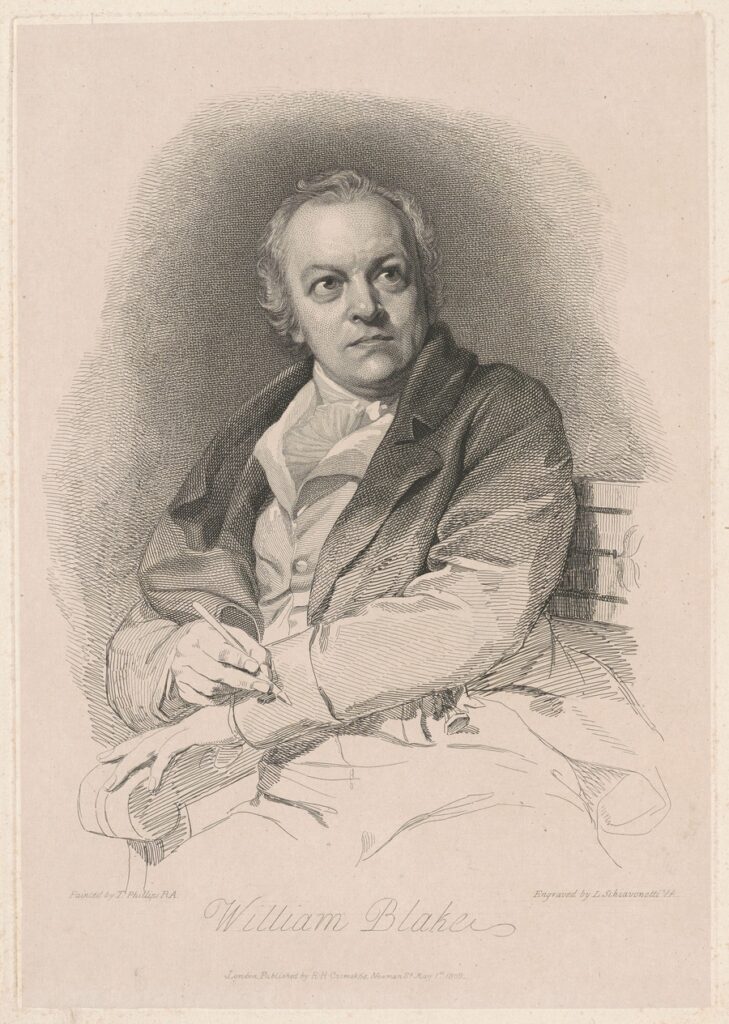
William Blake (28 November 1757 – 12 August 1827) was an English poet, artist, and printmaker whose visionary work helped shape Romantic poetry. Known for his symbolic language, spiritual intensity, and powerful contrasts between innocence and experience, Blake explored themes of childhood, faith, oppression, imagination, and the human soul. Though often misunderstood during his lifetime, Blake is now considered one of the most influential poets in English literature.
Born: 28 November 1757, London, England
Died: 12 August 1827, London, England
Nationality: English
Main themes:
• Innocence and experience
• Faith and divinity
• Social injustice
• Childhood and growth
• Imagination and vision
• Human suffering and redemption
Why Read William Blake
William Blake’s poems remain powerful for their emotional clarity, spiritual symbolism, and vivid imagery. His work moves between wonder and terror, joy and suffering, asking how innocence survives in a world shaped by hardship.
“The Lamb”
One of Blake’s most beloved poems from Songs of Innocence, reflecting gentleness, faith, and divine creation.
Little Lamb who made thee
Dost thou know who made thee
Gave thee life & bid thee feed.
By the stream & o’er the mead;
Gave thee clothing of delight,
Softest clothing wooly bright;
Gave thee such a tender voice,
Making all the vales rejoice!
Little Lamb who made thee
Dost thou know who made thee
Little Lamb I’ll tell thee,
Little Lamb I’ll tell thee!
He is called by thy name,
For he calls himself a Lamb:
He is meek & he is mild,
He became a little child:
I a child & thou a lamb,
We are called by his name.
Little Lamb God bless thee.
Little Lamb God bless thee.
—
“The Tyger”
Blake’s most famous poem, a fierce meditation on creation, beauty, fear, and divine mystery.
Tyger Tyger, burning bright,
In the forests of the night;
What immortal hand or eye,
Could frame thy fearful symmetry?
In what distant deeps or skies.
Burnt the fire of thine eyes?
On what wings dare he aspire?
What the hand, dare seize the fire?
And what shoulder, & what art,
Could twist the sinews of thy heart?
And when thy heart began to beat.
What dread hand? & what dread feet?
What the hammer? what the chain?
In what furnace was thy brain?
What the anvil? what dread grasp.
Dare its deadly terrors clasp?
When the stars threw down their spears
And water’d heaven with their tears:
Did he smile his work to see?
Did he who made the Lamb make thee?
Tyger Tyger burning bright,
In the forests of the night:
What immortal hand or eye,
Dare frame thy fearful symmetry?
—
“The Chimney Sweeper” (Songs of Innocence)
A haunting poem that combines childhood innocence with sharp social criticism.
When my mother died I was very young,
And my father sold me while yet my tongue
Could scarcely cry ”weep! ‘weep! ‘weep! ‘weep!
So your chimneys I sweep & in soot I sleep.
There’s little Tom Dacre, who cried when his head
That curl’d like a lamb’s back, was shav’d: so I said,
‘Hush, Tom! never mind it, for when your head’s bare,
You know that the soot cannot spoil your white hair.’
And so he was quiet, & that very night,
As Tom was a-sleeping, he had such a sight!
That thousands of sweepers, Dick, Joe, Ned, & Jack,
Were all of them lock’d up in coffins of black.
And by came an Angel who had a bright key,
And he open’d the coffins & set them all free;
Then down a green plain, leaping, laughing they run,
And wash in a river and shine in the Sun.
Then naked & white, all their bags left behind,
They rise upon clouds, and sport in the wind:
And the Angel told Tom if he’d be a good boy,
He’d have God for his father & never want joy.
And so Tom awoke; and we rose in the dark
And got with our bags & our brushes to work.
Tho’ the morning was cold, Tom was happy & warm;
So if all do their duty, they need not fear harm.
—
“London”
One of Blake’s darkest and most famous poems, exposing suffering, oppression, and the invisible chains of society.
I wander thro’ each charter’d street,
Near where the charter’d Thames does flow.
And mark in every face I meet
Marks of weakness, marks of woe.
In every cry of every Man,
In every Infants cry of fear,
In every voice: in every ban,
The mind-forg’d manacles I hear
How the Chimney-sweepers cry
Every blackning Church appalls,
And the hapless Soldiers sigh
Runs in blood down Palace walls
But most thro’ midnight streets I hear
How the youthful Harlots curse
Blasts the new-born Infants tear
And blights with plagues the Marriage hearse
—
“Infant Joy”
A brief and radiant poem celebrating innocence, birth, and the wonder of new life.
I have no name
I am but two days old.—
What shall I call thee?
I happy am
Joy is my name.—
Sweet joy befall thee!
Pretty joy!
Sweet joy but two days old.
Sweet joy I call thee:
Thou dost smile.
I sing the while
Sweet joy befall thee.
—
“Infant Sorrow”
A stark and powerful contrast to Infant Joy, portraying birth as struggle and conflict.
My mother groan’d! my father wept.
Into the dangerous world I leapt:
Helpless naked piping loud:
Like a fiend hid in a cloud.
Struggling in my father’s hands:
Striving against my swaddling bands:
Bound and weary I thought best
To sulk upon my mother’s breast.
—
“Auguries of Innocence” (excerpt)
One of Blake’s most famous philosophical poems, revealing how vast truths can be found in the smallest things.
To see a World in a Grain of Sand
And a Heaven in a Wild Flower
Hold Infinity in the palm of your hand
And Eternity in an hour
A Robin Red breast in a Cage
Puts all Heaven in a Rage
A Dog starv’d at his Master’s Gate
Predicts the ruin of the State
How to Start Reading William Blake
For innocence and faith, begin with “The Lamb.”
For mystery, power, and divine creation, read “The Tyger.”
For social criticism and darker themes, explore “London.”
To understand Blake’s contrasts between innocence and experience, pair “Infant Joy” with “Infant Sorrow.”
For Blake’s visionary philosophy, begin with “Auguries of Innocence.”
Final Thoughts
William Blake’s poetry endures because it captures both the beauty and terror of human experience. Through innocence, suffering, imagination, and vision, his poems continue to challenge readers to look deeper at the world and themselves.
You might enjoy: