
Introduction
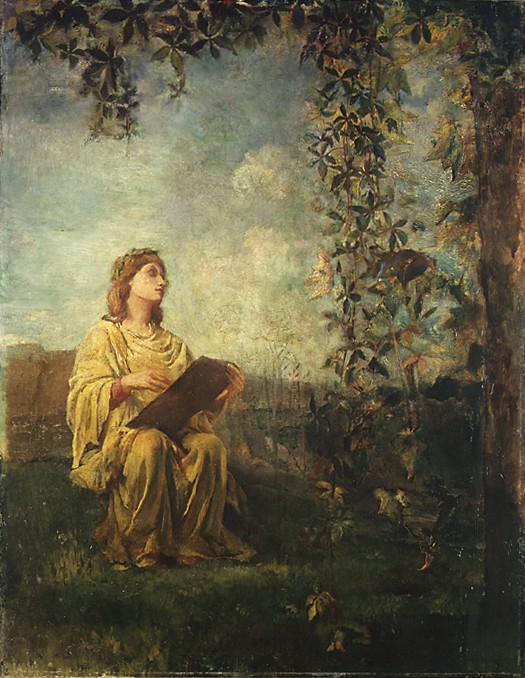
- Life has been one of poetry’s most enduring and universal subjects.
- Across centuries, poets have explored joy, struggle, purpose, and existence through verse.
- These famous poems about life range from hopeful and uplifting to philosophical and reflective.
Why Poets Write About Life
- Poetry offers a way to reflect on meaning, time, and mortality.
- Poems about life often emerge from moments of joy or hardship.
- Because life is universal, these poems remain relevant across generations.
Famous Poems About Life
You may also enjoy:
“O Me! O Life!” — Walt Whitman
- Questions the meaning and value of existence.
- Ends with an affirmation of purpose through participation in life.
- One of the most cited philosophical poems in American literature.
Oh me! Oh life! of the questions of these recurring,
Of the endless trains of the faithless, of cities fill’d with the foolish,
Of myself forever reproaching myself, (for who more foolish than I, and who more faithless?)
Of eyes that vainly crave the light, of the objects mean, of the struggle ever renew’d,
Of the poor results of all, of the plodding and sordid crowds I see around me,
Of the empty and useless years of the rest, with the rest me intertwined,
The question, O me! so sad, recurring—What good amid these, O me, O life?
Answer.
That you are here—that life exists and identity,
That the powerful play goes on, and you may contribute a verse.
“A Psalm of Life” — Henry Wadsworth Longfellow
- Encourages purposeful, active living.
- Responds directly to despair and uncertainty.
- A foundational optimistic poem about life.
What The Heart Of The Young Man Said To The Psalmist.
Tell me not, in mournful numbers,
Life is but an empty dream!
For the soul is dead that slumbers,
And things are not what they seem.
Life is real! Life is earnest!
And the grave is not its goal;
Dust thou art, to dust returnest,
Was not spoken of the soul.
Not enjoyment, and not sorrow,
Is our destined end or way;
But to act, that each to-morrow
Find us farther than to-day.
Art is long, and Time is fleeting,
And our hearts, though stout and brave,
Still, like muffled drums, are beating
Funeral marches to the grave.
In the world’s broad field of battle,
In the bivouac of Life,
Be not like dumb, driven cattle!
Be a hero in the strife!
Trust no Future, howe’er pleasant!
Let the dead Past bury its dead!
Act,— act in the living Present!
Heart within, and God o’erhead!
Lives of great men all remind us
We can make our lives sublime,
And, departing, leave behind us
Footprints on the sands of time;
Footprints, that perhaps another,
Sailing o’er life’s solemn main,
A forlorn and shipwrecked brother,
Seeing, shall take heart again.
Let us, then, be up and doing,
With a heart for any fate;
Still achieving, still pursuing,
Learn to labor and to wait.
“Life” — Charlotte Brontë
- Explores endurance, patience, and quiet hope.
- Balances realism with resilience.
- Often included in classic poems about life and strength.
LIFE, believe, is not a dream
So dark as sages say;
Oft a little morning rain
Foretells a pleasant day.
Sometimes there are clouds of gloom,
But these are transient all;
If the shower will make the roses bloom,
O why lament its fall ?
Rapidly, merrily,
Life’s sunny hours flit by,
Gratefully, cheerily,
Enjoy them as they fly !
What though Death at times steps in
And calls our Best away ?
What though sorrow seems to win,
O’er hope, a heavy sway ?
Yet hope again elastic springs,
Unconquered, though she fell;
Still buoyant are her golden wings,
Still strong to bear us well.
Manfully, fearlessly,
The day of trial bear,
For gloriously, victoriously,
Can courage quell despair !
Famous Short Poems About Life
“Because I could not stop for Death” — Emily Dickinson
- Uses death as a lens to reflect on life and eternity.
- Short, symbolic, and deeply philosophical.
- Frequently studied for its insight into existence.
LIFE, believe, is not a dream
So dark as sages say;
Oft a little morning rain
Foretells a pleasant day.
Sometimes there are clouds of gloom,
But these are transient all;
If the shower will make the roses bloom,
O why lament its fall ?
Rapidly, merrily,
Life’s sunny hours flit by,
Gratefully, cheerily,
Enjoy them as they fly !
What though Death at times steps in
And calls our Best away ?
What though sorrow seems to win,
O’er hope, a heavy sway ?
Yet hope again elastic springs,
Unconquered, though she fell;
Still buoyant are her golden wings,
Still strong to bear us well.
Manfully, fearlessly,
The day of trial bear,
For gloriously, victoriously,
Can courage quell despair !
“To Autumn” — John Keats
- Reflects on life through natural cycles.
- Celebrates fulfillment, maturity, and quiet beauty.
- Often interpreted as a meditation on time and mortality.
Season of mists and mellow fruitfulness,
Close bosom-friend of the maturing sun;
Conspiring with him how to load and bless
With fruit the vines that round the thatch-eves run;
To bend with apples the moss’d cottage-trees,
And fill all fruit with ripeness to the core;
To swell the gourd, and plump the hazel shells
With a sweet kernel; to set budding more,
And still more, later flowers for the bees,
Until they think warm days will never cease,
For summer has o’er-brimm’d their clammy cells.
Who hath not seen thee oft amid thy store?
Sometimes whoever seeks abroad may find
Thee sitting careless on a granary floor,
Thy hair soft-lifted by the winnowing wind;
Or on a half-reap’d furrow sound asleep,
Drows’d with the fume of poppies, while thy hook
Spares the next swath and all its twined flowers:
And sometimes like a gleaner thou dost keep
Steady thy laden head across a brook;
Or by a cyder-press, with patient look,
Thou watchest the last oozings hours by hours.
Where are the songs of spring? Ay, Where are they?
Think not of them, thou hast thy music too,—
While barred clouds bloomthe soft-dying day,
And touch the stubble-plains with rosy hue;
Then in a wailful choir the small gnats mourn
Among the river sallows, borne aloft
Or sinking as the light wind lives or dies;
And full-grown lambs loud bleat from hilly bourn;
Hedge-crickets sing; and now with treble soft
The red-breast whistles from a garden-croft;
And gathering swallows twitter in the skies.
Famous Happy Poems About Life
“A Psalm of Life” — Henry Wadsworth Longfellow
- Emphasizes hope, action, and optimism.
- Frequently quoted for its uplifting message.
- A classic example of joyful poetry about life.
“To Autumn” — John Keats
- Celebrates contentment rather than excitement.
- Focuses on appreciation of the present moment.
- Works well as a peaceful, life-affirming poem.
Famous Poems About Challenges in Life
“If—” — Rudyard Kipling
- Offers guidance on perseverance and moral strength.
- Written as advice for navigating hardship.
- Widely read as a poem about resilience.
If you can keep your head when all about you
Are losing theirs and blaming it on you,
If you can trust yourself when all men doubt you,
But make allowance for their doubting too;
If you can wait and not be tired by waiting,
Or being lied about, don’t deal in lies,
Or being hated, don’t give way to hating,
And yet don’t look too good, nor talk too wise:
If you can dream—and not make dreams your master;
If you can think—and not make thoughts your aim;
If you can meet with Triumph and Disaster
And treat those two impostors just the same;
If you can bear to hear the truth you’ve spoken
Twisted by knaves to make a trap for fools,
Or watch the things you gave your life to, broken,
And stoop and build ’em up with worn-out tools:
If you can make one heap of all your winnings
And risk it on one turn of pitch-and-toss,
And lose, and start again at your beginnings
And never breathe a word about your loss;
If you can force your heart and nerve and sinew
To serve your turn long after they are gone,
And so hold on when there is nothing in you
Except the Will which says to them: ‘Hold on!’
If you can talk with crowds and keep your virtue,
Or walk with Kings—nor lose the common touch,
If neither foes nor loving friends can hurt you,
If all men count with you, but none too much;
If you can fill the unforgiving minute
With sixty seconds’ worth of distance run,
Yours is the Earth and everything that’s in it,
And—which is more—you’ll be a Man, my son!
“Invictus” — William Ernest Henley
- Declares inner strength in the face of suffering.
- Famous for its defiant tone and closing lines.
- Often quoted in discussions of overcoming adversity.
Out of the night that covers me,
Black as the pit from pole to pole,
I thank whatever gods may be
For my unconquerable soul.
In the fell clutch of circumstance
I have not winced nor cried aloud.
Under the bludgeonings of chance
My head is bloody, but unbowed.
Beyond this place of wrath and tears
Looms but the Horror of the shade,
And yet the menace of the years
Finds and shall find me unafraid.
It matters not how strait the gate,
How charged with punishments the scroll,
I am the master of my fate,
I am the captain of my soul.
Famous Poems About Existence
“O Me! O Life!” — Walt Whitman
- Directly addresses existential doubt.
- Connects meaning to participation in life itself.
- Central to discussions of poetic existentialism.
“Because I could not stop for Death” — Emily Dickinson
- Explores existence beyond physical life.
- Uses metaphor to examine eternity and time.
- A cornerstone poem for philosophical reflection.
How to Choose a Poem About Life
- Short poems work well for reflection or quotation.
- Longer poems allow for moral or narrative development.
- Consider whether the desired tone is hopeful, reflective, or realistic.
- The most impactful poems often mirror personal experience.
Final Thoughts
- Classic poems about life endure because they explore universal human questions.
- Whether joyful, challenging, or philosophical, these poems offer lasting insight.
- Revisiting famous poems about life allows readers to reflect on their own experiences.
You might enjoy: