
You may also enjoy:
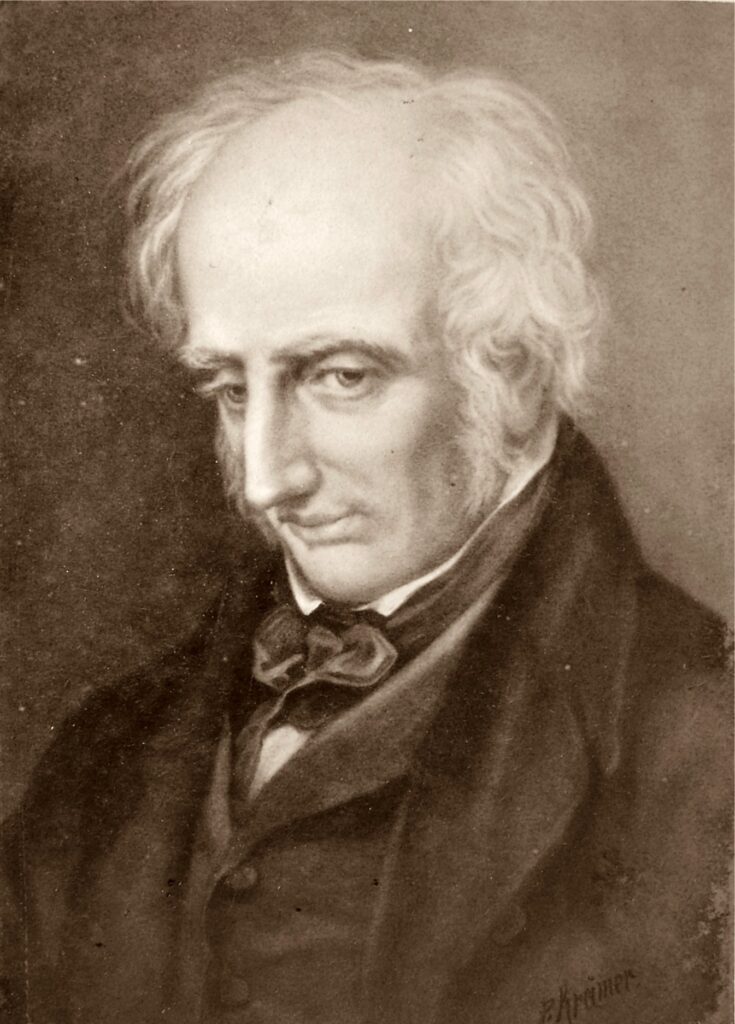
William Wordsworth (7 April 1770 – 23 April 1850) was an English Romantic poet whose work helped define the Romantic movement in literature. Known for his deep reverence for nature, emotional introspection, and belief in memory as a shaping force of the soul, Wordsworth transformed ordinary experiences into profound reflections on life, beauty, and human feeling. His poetry remains central to English literature for its clarity, sincerity, and spiritual connection to the natural world.
Born: 7 April 1770, Cockermouth, Cumberland, England
Died: 23 April 1850, Rydal Mount, Westmorland, England
Nationality: English
Main themes:
• Nature and the sublime
• Memory and reflection
• Childhood and innocence
• Human emotion
• Mortality and time
• Spiritual connection to the natural world
Why Read William Wordsworth
William Wordsworth’s poetry endures because it finds wonder in ordinary life. His poems explore how nature shapes memory, heals sorrow, and deepens human understanding, often turning simple moments into lasting spiritual experiences.
“I Wandered Lonely as a Cloud”
Wordsworth’s most famous poem, celebrating the beauty of nature and the enduring power of memory.
I wandered lonely as a cloud
That floats on high o’er vales and hills,
When all at once I saw a crowd,
A host, of golden daffodils;
Beside the lake, beneath the trees,
Fluttering and dancing in the breeze.
Continuous as the stars that shine
And twinkle on the milky way,
They stretched in never-ending line
Along the margin of a bay:
Ten thousand saw I at a glance,
Tossing their heads in sprightly dance.
For oft, when on my couch I lie
In vacant or in pensive mood,
They flash upon that inward eye
Which is the bliss of solitude;
And then my heart with pleasure fills,
And dances with the daffodils.
—
“Lines Written in Early Spring”
A thoughtful spring poem reflecting on nature’s beauty and humanity’s failures.
I heard a thousand blended notes,
While in a grove I sate reclined,
In that sweet mood when pleasant thoughts
Bring sad thoughts to the mind.
To her fair works did Nature link
The human soul that through me ran;
And much it grieved my heart to think
What man has made of man.
Through primrose tufts, in that green bower,
The periwinkle trailed its wreaths;
And ’tis my faith that every flower
Enjoys the air it breathes.
—
“The World Is Too Much with Us”
A powerful critique of materialism and the loss of connection with nature.
The world is too much with us; late and soon,
Getting and spending, we lay waste our powers;
Little we see in Nature that is ours;
We have given our hearts away, a sordid boon!
This Sea that bares her bosom to the moon;
The winds that will be howling at all hours,
And are up-gathered now like sleeping flowers;
For this, for everything, we are out of tune;
It moves us not.—Great God! I’d rather be
A Pagan suckled in a creed outworn;
So might I, standing on this pleasant lea,
Have glimpses that would make me less forlorn.
—
“My Heart Leaps Up”
A brief but famous poem connecting childhood wonder to the whole of life.
My heart leaps up when I behold
A rainbow in the sky:
So was it when my life began;
So is it now I am a man;
So be it when I shall grow old,
Or let me die!
The Child is father of the Man;
And I could wish my days to be
Bound each to each by natural piety.
—
“The Solitary Reaper”
A lyrical meditation on beauty, memory, and the lasting power of a single moment.
Behold her, single in the field,
Yon solitary Highland Lass!
Reaping and singing by herself;
Stop here, or gently pass!
Alone she cuts and binds the grain,
And sings a melancholy strain;
O listen! for the Vale profound
Is overflowing with the sound.
Will no one tell me what she sings?—
Perhaps the plaintive numbers flow
For old, unhappy, far-off things,
And battles long ago:
—
“Composed upon Westminster Bridge”
A rare urban poem from Wordsworth, finding beauty and stillness in the heart of London.
Earth has not anything to show more fair:
Dull would he be of soul who could pass by
A sight so touching in its majesty:
This City now doth, like a garment, wear
The beauty of the morning; silent, bare,
Ships, towers, domes, theatres, and temples lie
Open unto the fields, and to the sky;
All bright and glittering in the smokeless air.
—
“Ode: Intimations of Immortality” (excerpt)
One of Wordsworth’s most profound reflections on childhood, memory, and the loss of wonder.
Though nothing can bring back the hour
Of splendour in the grass, of glory in the flower;
We will grieve not, rather find
Strength in what remains behind;
In the primal sympathy
Which having been must ever be;
In the soothing thoughts that spring
Out of human suffering.
How to Start Reading William Wordsworth
For nature and joy, begin with “I Wandered Lonely as a Cloud.”
For reflection on humanity and nature, read “Lines Written in Early Spring.”
For philosophical and environmental themes, explore “The World Is Too Much with Us.”
For childhood wonder and continuity, start with “My Heart Leaps Up.”
For memory and emotional resonance, read “The Solitary Reaper.”
Final Thoughts
William Wordsworth’s poetry remains powerful because it reminds readers that beauty, memory, and meaning often live in the ordinary world around us. Through nature and reflection, his poems continue to offer peace, wonder, and wisdom.
You might enjoy: