
Introduction
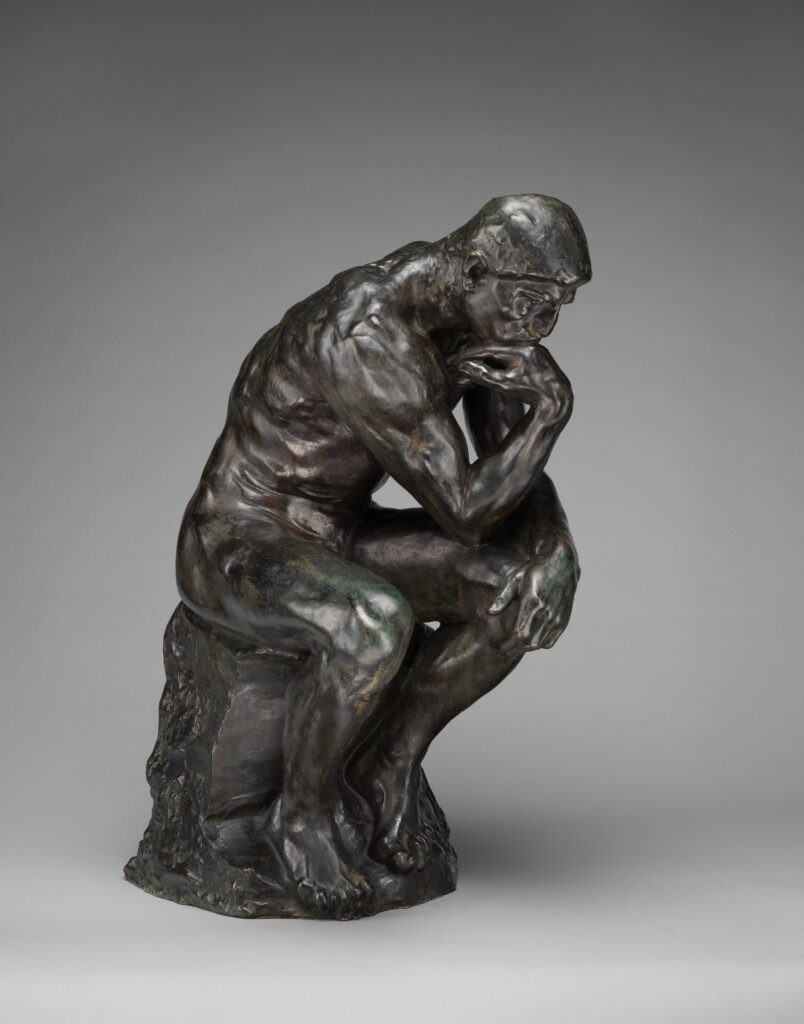
- Poets have long wrestled with questions of purpose, existence, and what gives life value. Across centuries, poetry has offered reflection on time, love, mortality, faith, and the human search for significance.
- The poems below explore meaning from philosophical, spiritual, and existential perspectives. Together, they show how poetry provides language for some of life’s most enduring questions.
Philosophical Reflections on Meaning
You may also enjoy:
O Me! O Life! — Walt Whitman
- Whitman confronts confusion and contradiction in the modern world. He ultimately affirms that simply participating in life gives it meaning.
Oh me! Oh life! of the questions of these recurring,
Of the endless trains of the faithless, of cities fill’d with the foolish,
Of myself forever reproaching myself, (for who more foolish than I, and who more faithless?)
Of eyes that vainly crave the light, of the objects mean, of the struggle ever renew’d,
Of the poor results of all, of the plodding and sordid crowds I see around me,
Of the empty and useless years of the rest, with the rest me intertwined,
The question, O me! so sad, recurring—What good amid these, O me, O life?
Answer.
That you are here—that life exists and identity,
That the powerful play goes on, and you may contribute a verse.
Sonnet 29 (“When, in disgrace with fortune and men’s eyes”) — William Shakespeare
- Shakespeare explores despair and self-doubt before concluding that love restores personal worth. The poem suggests that meaning may be found in emotional connection rather than social status.
When, in disgrace with fortune and men’s eyes,
I all alone beweep my outcast state,
And trouble deaf heaven with my bootless cries,
And look upon myself and curse my fate,
Wishing me like to one more rich in hope,
Featured like him, like him with friends possessed,
Desiring this man’s art and that man’s scope,
With what I most enjoy contented least;
Yet in these thoughts myself almost despising,
Haply I think on thee, and then my state,
(Like to the lark at break of day arising
From sullen earth) sings hymns at heaven’s gate;
For thy sweet love remembered such wealth brings
That then I scorn to change my state with kings.
A Psalm of Life — Henry Wadsworth Longfellow
- Longfellow urges readers to live actively and purposefully. Meaning, in this poem, is created through courage and moral effort.
What The Heart Of The Young Man Said To The Psalmist.
Tell me not, in mournful numbers,
Life is but an empty dream!
For the soul is dead that slumbers,
And things are not what they seem.
Life is real! Life is earnest!
And the grave is not its goal;
Dust thou art, to dust returnest,
Was not spoken of the soul.
Not enjoyment, and not sorrow,
Is our destined end or way;
But to act, that each to-morrow
Find us farther than to-day.
Art is long, and Time is fleeting,
And our hearts, though stout and brave,
Still, like muffled drums, are beating
Funeral marches to the grave.
In the world’s broad field of battle,
In the bivouac of Life,
Be not like dumb, driven cattle!
Be a hero in the strife!
Trust no Future, howe’er pleasant!
Let the dead Past bury its dead!
Act,— act in the living Present!
Heart within, and God o’erhead!
Lives of great men all remind us
We can make our lives sublime,
And, departing, leave behind us
Footprints on the sands of time;
Footprints, that perhaps another,
Sailing o’er life’s solemn main,
A forlorn and shipwrecked brother,
Seeing, shall take heart again.
Let us, then, be up and doing,
With a heart for any fate;
Still achieving, still pursuing,
Learn to labor and to wait.
Time, Mortality, and Significance
Sonnet 60 (“Like as the waves make towards the pebbled shore”) — William Shakespeare
- This sonnet meditates on time’s relentless movement. While time diminishes youth and beauty, Shakespeare implies that poetry can preserve meaning against decay.
Like as the waves make towards the pebbl’d shore,
So do our minutes hasten to their end;
Each changing place with that which goes before,
In sequent toil all forwards do contend.
Nativity, once in the main of light,
Crawls to maturity, wherewith being crown’d,
Crooked eclipses ‘gainst his glory fight,
And Time that gave doth now his gift confound.
Time doth transfix the flourish set on youth
And delves the parallels in beauty’s brow,
Feeds on the rarities of nature’s truth,
And nothing stands but for his scythe to mow:
And yet to times in hope my verse shall stand,
Praising thy worth, despite his cruel hand.
The World Is Too Much with Us — William Wordsworth
- Wordsworth critiques material distraction and emotional disconnection from nature. The poem suggests that meaning is lost when humanity turns away from spiritual awareness.
The world is too much with us; late and soon,
Getting and spending, we lay waste our powers;—
Little we see in Nature that is ours;
We have given our hearts away, a sordid boon!
This Sea that bares her bosom to the moon;
The winds that will be howling at all hours,
And are up-gathered now like sleeping flowers;
For this, for everything, we are out of tune;
It moves us not. Great God! I’d rather be
A Pagan suckled in a creed outworn;
So might I, standing on this pleasant lea,
Have glimpses that would make me less forlorn;
Have sight of Proteus rising from the sea;
Or hear old Triton blow his wreathèd horn.
Dover Beach — Matthew Arnold
- Arnold reflects on uncertainty and the fading of traditional faith. The poem suggests that meaning may be found in human connection amid doubt.
The sea is calm tonight.
The tide is full, the moon lies fair
Upon the straits; on the French coast the light
Gleams and is gone; the cliffs of England stand,
Glimmering and vast, out in the tranquil bay.
Come to the window, sweet is the night-air!
Only, from the long line of spray
Where the sea meets the moon-blanched land,
Listen! you hear the grating roar
Of pebbles which the waves draw back, and fling,
At their return, up the high strand,
Begin, and cease, and then again begin,
With tremulous cadence slow, and bring
The eternal note of sadness in.
Sophocles long ago
Heard it on the Ægean, and it brought
Into his mind the turbid ebb and flow
Of human misery; we
Find also in the sound a thought,
Hearing it by this distant northern sea.
The Sea of Faith
Was once, too, at the full, and round earth’s shore
Lay like the folds of a bright girdle furled.
But now I only hear
Its melancholy, long, withdrawing roar,
Retreating, to the breath
Of the night-wind, down the vast edges drear
And naked shingles of the world.
Ah, love, let us be true
To one another! for the world, which seems
To lie before us like a land of dreams,
So various, so beautiful, so new,
Hath really neither joy, nor love, nor light,
Nor certitude, nor peace, nor help for pain;
And we are here as on a darkling plain
Swept with confused alarms of struggle and flight,
Where ignorant armies clash by night.
Spiritual and Inner Meaning
Sonnet 146 (“Poor soul, the centre of my sinful earth”) — William Shakespeare
- Shakespeare reflects on the tension between outward life and inward reflection. The poem suggests that true meaning lies not in external wealth but in spiritual growth.
Poor soul, the centre of my sinful earth,
[……] these rebel powers that thee array,
Why dost thou pine within and suffer dearth,
Painting thy outward walls so costly gay?
Why so large cost, having so short a lease,
Dost thou upon thy fading mansion spend?
Shall worms, inheritors of this excess,
Eat up thy charge? Is this thy body’s end?
Then soul, live thou upon thy servant’s loss
And let that pine to aggravate thy store;
Buy terms divine in selling hours of dross;
Within be fed, without be rich no more.
So shalt thou feed on Death, that feeds on men,
And, Death once dead, there’s no more dying then.
The Chambered Nautilus — Oliver Wendell Holmes Sr.
- Holmes uses the image of a growing shell as a metaphor for intellectual and spiritual development. Meaning emerges through continual expansion of the self.
This is the ship of pearl, which, poets feign,
Sails the unshadowed main,—
The venturous bark that flings
On the sweet summer wind its purpled wings
In gulfs enchanted, where the Siren sings,
And coral reefs lie bare,
Where the cold sea-maids rise to sun their streaming hair.
Its webs of living gauze no more unfurl;
Wrecked is the ship of pearl!
And every chambered cell,
Where its dim dreaming life was wont to dwell,
As the frail tenant shaped his growing shell,
Before thee lies revealed,—
Its irised ceiling rent, its sunless crypt unsealed!
Year after year beheld the silent toil
That spread his lustrous coil;
Still, as the spiral grew,
He left the past year’s dwelling for the new,
Stole with soft step its shining archway through,
Built up its idle door,
Stretched in his last-found home, and knew the old no more.
Thanks for the heavenly message brought by thee,
Child of the wandering sea,
Cast from her lap, forlorn!
From thy dead lips a clearer note is born
Than ever Triton blew from wreathèd horn!
While on mine ear it rings,
Through the deep caves of thought I hear a voice that sings:—
Build thee more stately mansions, O my soul,
As the swift seasons roll!
Leave thy low-vaulted past!
Let each new temple, nobler than the last,
Shut thee from heaven with a dome more vast,
Till thou at length art free,
Leaving thine outgrown shell by life’s unresting sea!
Invictus — William Ernest Henley
- Henley emphasizes inner strength and personal resolve. The poem frames meaning as something forged through resilience in the face of hardship.
Out of the night that covers me,
Black as the pit from pole to pole,
I thank whatever gods may be
For my unconquerable soul.
In the fell clutch of circumstance
I have not winced nor cried aloud.
Under the bludgeonings of chance
My head is bloody, but unbowed.
Beyond this place of wrath and tears
Looms but the Horror of the shade,
And yet the menace of the years
Finds and shall find me unafraid.
It matters not how strait the gate,
How charged with punishments the scroll,
I am the master of my fate,
I am the captain of my soul.
How Poets Explore Meaning
- Across these works, poets approach meaning in different ways:
- Through love and emotional connection
- Through resistance to time and mortality
- Through spiritual reflection
- Through moral action
- Through resilience and perseverance
- Some poems suggest that meaning is preserved through art, while others argue it must be created through effort or discovered through faith.
Final Thoughts
- Famous poems about meaning continue to resonate because they address questions that remain timeless. Whether philosophical, spiritual, or personal, these works show how poetry helps readers reflect on what gives life significance.
- You may also wish to explore related collections, including poems about life, poems about love, and poems about death.
You might enjoy: