
Introduction
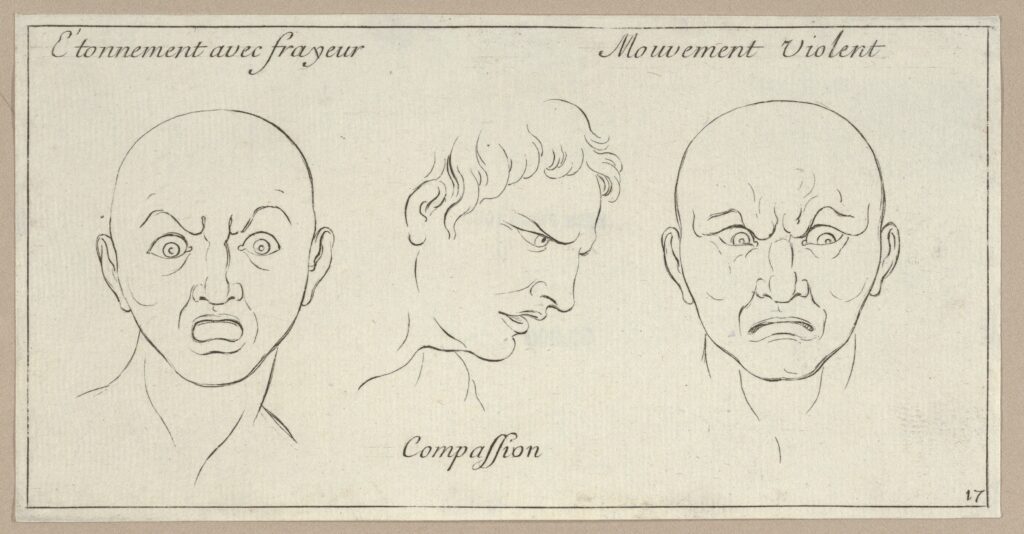
- Anger has long been a powerful force in poetry. Whether directed at injustice, betrayal, loss, or personal struggle, anger gives voice to intense emotion. These famous poems about anger show how poets transform outrage, frustration, and resentment into reflection and meaning.
Why Poets Write About Anger
You may also enjoy:
- Anger can reveal deeply held values. In poetry, it often appears as protest, moral conviction, personal confrontation, or inner turmoil. Rather than suppressing anger, poets frequently use it to examine truth and justice.
Anger and Moral Protest
“The Cry of the Children” — Elizabeth Barrett Browning
- A powerful protest against child labor and social injustice during the Industrial Revolution.
“Pheu pheu, ti prosderkesthe m ommasin, tekna;”
[[Alas, alas, why do you gaze at me with your eyes, my children.]]—Medea.
Do ye hear the children weeping, O my brothers,
Ere the sorrow comes with years ?
They are leaning their young heads against their mothers, —
And that cannot stop their tears.
The young lambs are bleating in the meadows ;
The young birds are chirping in the nest ;
The young fawns are playing with the shadows ;
The young flowers are blowing toward the west—
But the young, young children, O my brothers,
They are weeping bitterly !
They are weeping in the playtime of the others,
In the country of the free.
Do you question the young children in the sorrow,
Why their tears are falling so ?
The old man may weep for his to-morrow
Which is lost in Long Ago —
The old tree is leafless in the forest —
The old year is ending in the frost —
The old wound, if stricken, is the sorest —
The old hope is hardest to be lost :
But the young, young children, O my brothers,
Do you ask them why they stand
Weeping sore before the bosoms of their mothers,
In our happy Fatherland ?
They look up with their pale and sunken faces,
And their looks are sad to see,
For the man’s grief abhorrent, draws and presses
Down the cheeks of infancy —
“Your old earth,” they say, “is very dreary;”
“Our young feet,” they say, “are very weak !”
Few paces have we taken, yet are weary—
Our grave-rest is very far to seek !
Ask the old why they weep, and not the children,
For the outside earth is cold —
And we young ones stand without, in our bewildering,
And the graves are for the old !”
“True,” say the children, “it may happen
That we die before our time !
Little Alice died last year her grave is shapen
Like a snowball, in the rime.
We looked into the pit prepared to take her —
Was no room for any work in the close clay :
From the sleep wherein she lieth none will wake her,
Crying, ‘Get up, little Alice ! it is day.’
If you listen by that grave, in sun and shower,
With your ear down, little Alice never cries ;
Could we see her face, be sure we should not know her,
For the smile has time for growing in her eyes ,—
And merry go her moments, lulled and stilled in
The shroud, by the kirk-chime !
It is good when it happens,” say the children,
“That we die before our time !”
Alas, the wretched children ! they are seeking
Death in life, as best to have !
They are binding up their hearts away from breaking,
With a cerement from the grave.
Go out, children, from the mine and from the city —
Sing out, children, as the little thrushes do —
Pluck you handfuls of the meadow-cowslips pretty
Laugh aloud, to feel your fingers let them through !
But they answer, ” Are your cowslips of the meadows
Like our weeds anear the mine ?
Leave us quiet in the dark of the coal-shadows,
From your pleasures fair and fine!
“For oh,” say the children, “we are weary,
And we cannot run or leap —
If we cared for any meadows, it were merely
To drop down in them and sleep.
Our knees tremble sorely in the stooping —
We fall upon our faces, trying to go ;
And, underneath our heavy eyelids drooping,
The reddest flower would look as pale as snow.
For, all day, we drag our burden tiring,
Through the coal-dark, underground —
Or, all day, we drive the wheels of iron
In the factories, round and round.
“For all day, the wheels are droning, turning, —
Their wind comes in our faces, —
Till our hearts turn, — our heads, with pulses burning,
And the walls turn in their places
Turns the sky in the high window blank and reeling —
Turns the long light that droppeth down the wall, —
Turn the black flies that crawl along the ceiling —
All are turning, all the day, and we with all ! —
And all day, the iron wheels are droning ;
And sometimes we could pray,
‘O ye wheels,’ (breaking out in a mad moaning)
‘Stop ! be silent for to-day ! ‘ “
Ay ! be silent ! Let them hear each other breathing
For a moment, mouth to mouth —
Let them touch each other’s hands, in a fresh wreathing
Of their tender human youth !
Let them feel that this cold metallic motion
Is not all the life God fashions or reveals —
Let them prove their inward souls against the notion
That they live in you, or under you, O wheels ! —
Still, all day, the iron wheels go onward,
As if Fate in each were stark ;
And the children’s souls, which God is calling sunward,
Spin on blindly in the dark.
Now tell the poor young children, O my brothers,
To look up to Him and pray —
So the blessed One, who blesseth all the others,
Will bless them another day.
They answer, ” Who is God that He should hear us,
While the rushing of the iron wheels is stirred ?
When we sob aloud, the human creatures near us
Pass by, hearing not, or answer not a word !
And we hear not (for the wheels in their resounding)
Strangers speaking at the door :
Is it likely God, with angels singing round Him,
Hears our weeping any more ?
” Two words, indeed, of praying we remember ;
And at midnight’s hour of harm, —
‘Our Father,’ looking upward in the chamber,
We say softly for a charm.
We know no other words, except ‘Our Father,’
And we think that, in some pause of angels’ song,
God may pluck them with the silence sweet to gather,
And hold both within His right hand which is strong.
‘Our Father !’ If He heard us, He would surely
(For they call Him good and mild)
Answer, smiling down the steep world very purely,
‘Come and rest with me, my child.’
“But, no !” say the children, weeping faster,
” He is speechless as a stone ;
And they tell us, of His image is the master
Who commands us to work on.
Go to ! ” say the children,—”up in Heaven,
Dark, wheel-like, turning clouds are all we find !
Do not mock us ; grief has made us unbelieving —
We look up for God, but tears have made us blind.”
Do ye hear the children weeping and disproving,
O my brothers, what ye preach ?
For God’s possible is taught by His world’s loving —
And the children doubt of each.
And well may the children weep before you ;
They are weary ere they run ;
They have never seen the sunshine, nor the glory
Which is brighter than the sun :
They know the grief of man, without its wisdom ;
They sink in the despair, without its calm —
Are slaves, without the liberty in Christdom, —
Are martyrs, by the pang without the palm, —
Are worn, as if with age, yet unretrievingly
No dear remembrance keep,—
Are orphans of the earthly love and heavenly :
Let them weep ! let them weep !
They look up, with their pale and sunken faces,
And their look is dread to see,
For they think you see their angels in their places,
With eyes meant for Deity ;—
“How long,” they say, “how long, O cruel nation,
Will you stand, to move the world, on a child’s heart, —
Stifle down with a mailed heel its palpitation,
And tread onward to your throne amid the mart ?
Our blood splashes upward, O our tyrants,
And your purple shews your path ;
But the child’s sob curseth deeper in the silence
Than the strong man in his wrath !”
“London” — William Blake
- Blake expresses outrage at political and social corruption in eighteenth-century England.
I wander thro’ each charter’d street,
Near where the charter’d Thames does flow.
And mark in every face I meet
Marks of weakness, marks of woe.
In every cry of every Man,
In every Infants cry of fear,
In every voice: in every ban,
The mind-forg’d manacles I hear
How the Chimney-sweepers cry
Every blackning Church appalls,
And the hapless Soldiers sigh
Runs in blood down Palace walls
But most thro’ midnight streets I hear
How the youthful Harlots curse
Blasts the new-born Infants tear
And blights with plagues the Marriage hearse
Personal and Emotional Anger
“A Poison Tree” — William Blake
- Blake explores the consequences of suppressed anger and resentment.
I was angry with my friend;
I told my wrath, my wrath did end.
I was angry with my foe:
I told it not, my wrath did grow.
And I waterd it in fears,
Night & morning with my tears:
And I sunned it with smiles,
And with soft deceitful wiles.
And it grew both day and night.
Till it bore an apple bright.
And my foe beheld it shine,
And he knew that it was mine.
And into my garden stole,
When the night had veild the pole;
In the morning glad I see;
My foe outstretched beneath the tree.
Anger and Inner Conflict
“My Last Duchess” — Robert Browning
- Through dramatic monologue, Browning reveals jealousy and controlled anger beneath a composed exterior.
FERRARA
That’s my last Duchess painted on the wall,
Looking as if she were alive. I call
That piece a wonder, now; Fra Pandolf’s hands
Worked busily a day, and there she stands.
Will’t please you sit and look at her? I said
“Fra Pandolf” by design, for never read
Strangers like you that pictured countenance,
The depth and passion of its earnest glance,
But to myself they turned (since none puts by
The curtain I have drawn for you, but I)
And seemed as they would ask me, if they durst,
How such a glance came there; so, not the first
Are you to turn and ask thus. Sir, ’twas not
Her husband’s presence only, called that spot
Of joy into the Duchess’ cheek; perhaps
Fra Pandolf chanced to say, “Her mantle laps
Over my lady’s wrist too much,” or “Paint
Must never hope to reproduce the faint
Half-flush that dies along her throat.” Such stuff
Was courtesy, she thought, and cause enough
For calling up that spot of joy. She had
A heart—how shall I say?— too soon made glad,
Too easily impressed; she liked whate’er
She looked on, and her looks went everywhere.
Sir, ’twas all one! My favour at her breast,
The dropping of the daylight in the West,
The bough of cherries some officious fool
Broke in the orchard for her, the white mule
She rode with round the terrace—all and each
Would draw from her alike the approving speech,
Or blush, at least. She thanked men—good! but thanked
Somehow—I know not how—as if she ranked
My gift of a nine-hundred-years-old name
With anybody’s gift. Who’d stoop to blame
This sort of trifling? Even had you skill
In speech—which I have not—to make your will
Quite clear to such an one, and say, “Just this
Or that in you disgusts me; here you miss,
Or there exceed the mark”—and if she let
Herself be lessoned so, nor plainly set
Her wits to yours, forsooth, and made excuse—
E’en then would be some stooping; and I choose
Never to stoop. Oh, sir, she smiled, no doubt,
Whene’er I passed her; but who passed without
Much the same smile? This grew; I gave commands;
Then all smiles stopped together. There she stands
As if alive. Will’t please you rise? We’ll meet
The company below, then. I repeat,
The Count your master’s known munificence
Is ample warrant that no just pretense
Of mine for dowry will be disallowed;
Though his fair daughter’s self, as I avowed
At starting, is my object. Nay, we’ll go
Together down, sir. Notice Neptune, though,
Taming a sea-horse, thought a rarity,
Which Claus of Innsbruck cast in bronze for me!
“The Tyger” — William Blake
- Questions the fierce power behind creation, blending awe with underlying intensity.
Tyger Tyger, burning bright,
In the forests of the night;
What immortal hand or eye,
Could frame thy fearful symmetry?
In what distant deeps or skies.
Burnt the fire of thine eyes?
On what wings dare he aspire?
What the hand, dare seize the fire?
And what shoulder, & what art,
Could twist the sinews of thy heart?
And when thy heart began to beat.
What dread hand? & what dread feet?
What the hammer? what the chain,
In what furnace was thy brain?
What the anvil? what dread grasp.
Dare its deadly terrors clasp?
When the stars threw down their spears
And water’d heaven with their tears:
Did he smile his work to see?
Did he who made the Lamb make thee?
Tyger Tyger burning bright,
In the forests of the night:
What immortal hand or eye,
Dare frame thy fearful symmetry?
How to Choose a Poem About Anger
- For social protest, look to poets who challenge injustice directly.
- For psychological exploration, choose dramatic monologues or symbolic works.
- For restrained or reflective anger, consider poems that reveal tension beneath calm language.
- Think about tone: confrontational, sorrowful, restrained, or transformative.
Final Thoughts
- Famous poems about anger endure because anger itself is part of human experience. Whether expressed through protest, reflection, or dramatic tension, these poems show how powerful emotions can be shaped into lasting art.
You might enjoy: