
Introduction
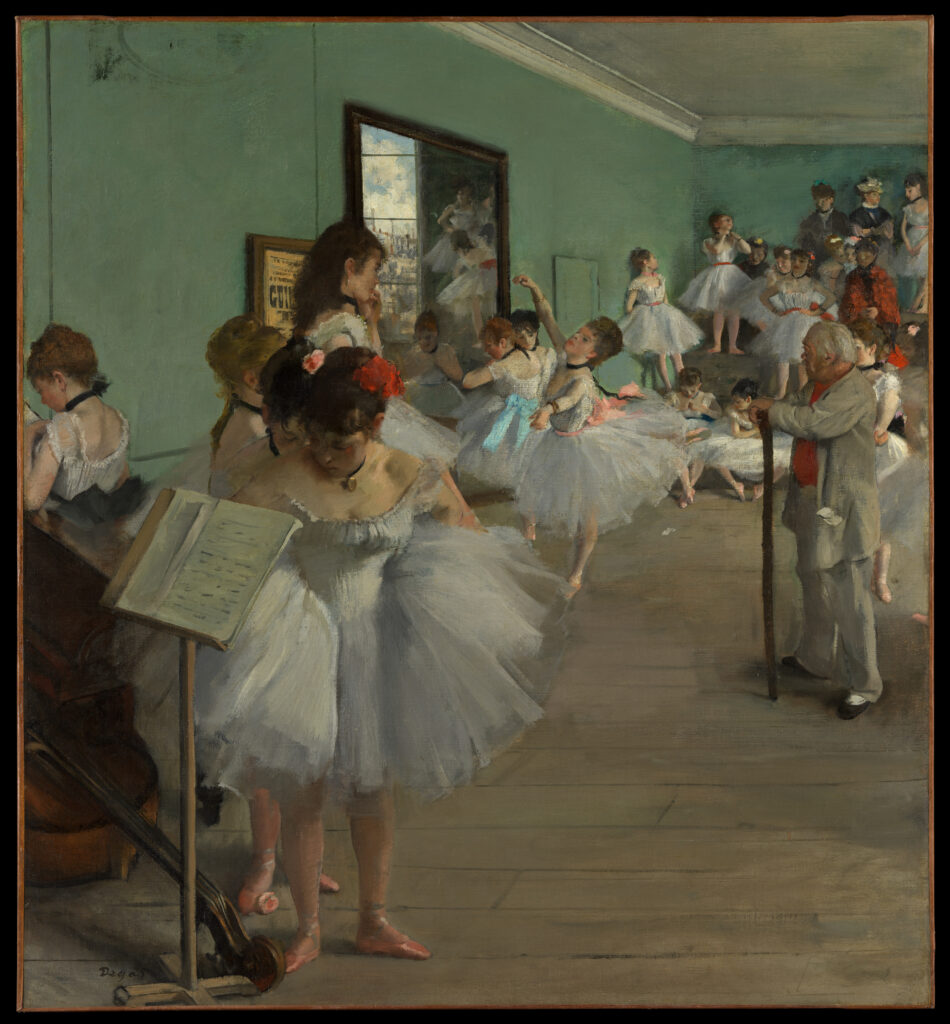
- Strength in poetry is not limited to physical power, but often expressed through endurance, moral courage, faith, and resilience.
- For centuries, poets have written about women’s strength in the face of hardship, loss, and social constraint.
- These famous poems about women’s strength reflect both inner resolve and quiet perseverance, drawn from classic literature.
How Poets Have Written About Women’s Strength
- Strength is often portrayed through patience, sacrifice, and dignity.
- Many poems emphasize emotional resilience rather than force.
- Women poets in particular used verse to assert agency and inner authority in restrictive eras.
Famous Poems About Women’s Strength
You may also enjoy:
“The Cry of the Children” — Elizabeth Barrett Browning
- The poems condemns child labor during the industrial revolution
- It contrasts childhood innocence with industrial suffering.
- Browning uses poetry as a form of social protest.
“Pheu pheu, ti prosderkesthe m ommasin, tekna;” [Alas, alas, why do you gaze at me with your eyes, my children.] —Medea.
Do you hear the children weeping, O my brothers,
Before sorrow comes with years?
They lean their young heads against their mothers,
And that cannot stop their tears.
Young lambs bleat in the meadows;
Young birds chirp in the nest;
Young fawns play. with the shadows;
Young flowers blow toward the west—
But the young children, O my brothers,
They weep bitterly!
They weep in the playtime of others,
In the country of the free.
Do you question the young children in sorrow,
Why their tears fall so?
The old man may weep for his tomorrow,
Which is lost in long ago.
The old tree is leafless in the forest.
The old year ends in frost.
The old wound, if struck, is the most sore.
The old hope is hardest to lose:
But the young children, O my brothers,
Do you ask them why they stand,
Weeping sore before the bosoms of their mothers,
In our happy fatherland?
They look up with pale, sunken faces,
And their looks are sad to see.
For the man’s grief is abhorrent, it draws and presses
Down the cheeks of infancy.
“Your old earth,” they say, “is very dreary.”
“Our young feet,” they say, “are very weak.”
Few steps have we taken, yet we are weary.
Our graves are very far to seek!
Ask the old why they weep, and not the children,
For the outside earth is cold.
And we young ones stand bewildered,
And the graves belong to the old.
“True,” say the children, “it may happen that we die before our time.
Little Alice died last year; her grave is shaped like a snowball in the rime.
We looked into the pit prepared to take her.
There was no room for any work in the close clay.
From the sleep in which she lies, none will wake her, crying, “Get up, little Alice! It is day.”
If you listen at that grave, in sun and shower, with your ear close, little Alice never cries.
Could we see her face? We would not know her, for the smile grows in her eyes—
And merry go her moments, lulled and still in the shroud, by the kirk-chime!
It is good when it happens,” say the children, “that we die before our time!”
Alas, the wretched children! They are seeking death in life, as best to have.
They bind their hearts away from breaking, with a shroud from the grave.
Go out, children, from the mine and from the city— sing out, children, as the little thrushes do—pluck handfuls of meadow-cowslips, pretty, laugh aloud, to feel your fingers let them through!
But they answer, “Are your cowslips of the meadow like our weeds near the mine? Leave us quiet in the dark of the coal shadows, from your pleasures fair and fine.”
“For oh,” say the children, “we are weary, and we cannot run or leap.
If we cared for any meadow, it would be merely to drop down in it and sleep.
Our knees tremble sorely in stooping— we fall upon our faces, trying to go; and, underneath our heavy drooping eyelids, the reddest flower would look as pale as snow.
For all day, we drag our burden, tiring, through the coal-dark underground— or all day, we drive the wheels of iron in the factories, round and round.”
For all day, the wheels drone and turn— their wind comes into our faces— until our hearts turn, our heads with pulses burning, and the walls turn in their places. They turn the sky in the high window, blank and reeling—turn the long light that drops down the wall—turn the black flies that crawl along the ceiling. All are turning all day, and we with all— and all day, the iron wheels drone; sometimes we could pray, “O ye wheels,” breaking out in a mad moaning, “Stop! Be silent for today!”
Ay! Be silent! Let them hear each other breathing for a moment, mouth to mouth.
Let them touch each other’s hands in a fresh wreathing of their tender human youth.
Let them feel that this cold metallic motion is not all the life God fashions or reveals.
Let them prove their inward souls against the notion that they live in you, or under you, O wheels.
Still, all day, the iron wheels go onward, as if Fate were stark. And the children’s souls, which God is calling sunward, spin blindly in the dark.
Now tell the poor young children, O my brothers, to look up to Him and pray—so the blessed One, who blesses all the others, will bless them another day. They answer, “Who is God that He should hear us, while the rushing of the iron wheels is stirred? When we sob aloud, the human creatures near us pass by, hearing nothing, or answering not a word.
Is it likely that God, with angels singing round Him, hears our weeping any more?”
Two words of prayer we remember: “Our Father,” at midnight’s hour of harm—looking upward in the chamber, we say softly for a charm.
We know no other words, except “Our Father,” and we think that, in some pause of angels’ song, God may pluck them with the silence sweet to gather, and hold both within His right hand, which is strong.
“If He heard us,” he would surely answer, smiling down the steep world purely, “Come and rest with me, my child.”
But no! say the children, weeping faster, “He is speechless as a stone.”
They tell us that His image is the master who commands us to work.
Go to—say the children—up in Heaven—dark, wheel-like, turning clouds are all we find!
Do not mock us; grief has made us unbelieving. We look up for God, but tears have made us blind.
Do you hear the children weeping and disproving, O my brothers, what you preach? For God’s possibility is taught by His world’s love, and the children doubt each.
And well may the children weep before you; they are weary ere they run.
They have never seen the sunshine, nor the glory that is brighter than the sun.
They know the grief of man without wisdom; they sink in despair without calm.
They are slaves without liberty, martyrs without palm, worn as if with age, yet no remberence keeps.
Orphans of earthly love and heavenly—let them weep, let them weep.
“Mother and Poet” — Elizabeth Barrett Browning
- Presents strength through sacrifice and moral conviction.
- Explores grief endured without surrender.
- A defining portrayal of emotional fortitude.
I.
Dead ! One of them shot by the sea in the east,
And one of them shot in the west by the sea.
Dead ! both my boys ! When you sit at the feast
And are wanting a great song for Italy free,
Let none look at me !
II.
Yet I was a poetess only last year,
And good at my art, for a woman, men said ;
But this woman, this, who is agonized here,
— The east sea and west sea rhyme on in her head
For ever instead.
III.
What art can a woman be good at ? Oh, vain !
What art is she good at, but hurting her breast
With the milk-teeth of babes, and a smile at the pain ?
Ah boys, how you hurt ! you were strong as you pressed,
And I proud, by that test.
IV.
What art’s for a woman ? To hold on her knees
Both darlings ! to feel all their arms round her throat,
Cling, strangle a little ! to sew by degrees
And ‘broider the long-clothes and neat little coat ;
To dream and to doat.
V.
To teach them … It stings there ! I made them indeed
Speak plain the word country. I taught them, no doubt,
That a country’s a thing men should die for at need.
I prated of liberty, rights, and about
The tyrant cast out.
VI.
And when their eyes flashed … O my beautiful eyes ! …
I exulted ; nay, let them go forth at the wheels
Of the guns, and denied not. But then the surprise
When one sits quite alone ! Then one weeps, then one kneels !
God, how the house feels !
VII.
At first, happy news came, in gay letters moiled
With my kisses, — of camp-life and glory, and how
They both loved me ; and, soon coming home to be spoiled
In return would fan off every fly from my brow
With their green laurel-bough.
VIII.
Then was triumph at Turin : Ancona was free !’
And some one came out of the cheers in the street,
With a face pale as stone, to say something to me.
My Guido was dead ! I fell down at his feet,
While they cheered in the street.
IX.
I bore it ; friends soothed me ; my grief looked sublime
As the ransom of Italy. One boy remained
To be leant on and walked with, recalling the time
When the first grew immortal, while both of us strained
To the height he had gained.
X.
And letters still came, shorter, sadder, more strong,
Writ now but in one hand, I was not to faint, —
One loved me for two — would be with me ere long :
And Viva l’ Italia ! — he died for, our saint,
Who forbids our complaint.”
XI.
My Nanni would add, he was safe, and aware
Of a presence that turned off the balls, — was imprest
It was Guido himself, who knew what I could bear,
And how ’twas impossible, quite dispossessed,
To live on for the rest.”
XII.
On which, without pause, up the telegraph line
Swept smoothly the next news from Gaeta : — Shot.
Tell his mother. Ah, ah, his, ‘ their ‘ mother, — not mine, ‘
No voice says “My mother” again to me. What !
You think Guido forgot ?
XIII.
Are souls straight so happy that, dizzy with Heaven,
They drop earth’s affections, conceive not of woe ?
I think not. Themselves were too lately forgiven
Through THAT Love and Sorrow which reconciled so
The Above and Below.
XIV.
O Christ of the five wounds, who look’dst through the dark
To the face of Thy mother ! consider, I pray,
How we common mothers stand desolate, mark,
Whose sons, not being Christs, die with eyes turned away,
And no last word to say !
XV.
Both boys dead ? but that’s out of nature. We all
Have been patriots, yet each house must always keep one.
‘Twere imbecile, hewing out roads to a wall ;
And, when Italy ‘s made, for what end is it done
If we have not a son ?
XVI.
Ah, ah, ah ! when Gaeta’s taken, what then ?
When the fair wicked queen sits no more at her sport
Of the fire-balls of death crashing souls out of men ?
When the guns of Cavalli with final retort
Have cut the game short ?
XVII.
When Venice and Rome keep their new jubilee,
When your flag takes all heaven for its white, green, and red,
When you have your country from mountain to sea,
When King Victor has Italy’s crown on his head,
(And I have my Dead) —
XVIII.
What then ? Do not mock me. Ah, ring your bells low,
And burn your lights faintly ! My country is there,
Above the star pricked by the last peak of snow :
My Italy ‘s THERE, with my brave civic Pair,
To disfranchise despair !
XIX.
Forgive me. Some women bear children in strength,
And bite back the cry of their pain in self-scorn ;
But the birth-pangs of nations will wring us at length
Into wail such as this — and we sit on forlorn
When the man-child is born.
XX.
Dead ! One of them shot by the sea in the east,
And one of them shot in the west by the sea.
Both ! both my boys ! If in keeping the feast
You want a great song for your Italy free,
Let none look at me !
Poems About Inner Strength and Resilience
“If Thou Must Love Me” — Elizabeth Barrett Browning
Strength expressed through emotional honesty.
Rejects shallow affection in favor of enduring connection.
Demonstrates self-possession and clarity.
If thou must love me, let it be for nought
Except for love’s sake only. Do not say
I love her for her smile … her look … her way
Of speaking gently, … for a trick of thought
That falls in well with mine, and certes brought
A sense of pleasant ease on such a day’—
For these things in themselves, Belovèd, may
Be changed, or change for thee,—and love, so wrought,
May be unwrought so. Neither love me for
Thine own dear pity’s wiping my cheeks dry,—
A creature might forget to weep, who bore
Thy comfort long, and lose thy love thereby!
But love me for love’s sake, that evermore
Thou may’st love on, through love’s eternity.
Women Poets Writing About Strength
Emily Dickinson
- Strength expressed through restraint and precision.
- Her poems often present endurance as quiet resistance.
- Many of her works explore power through inward resolve.
Phyllis Wheatley
- Strength shown through intellectual authority and faith.
- Her poetry challenged cultural assumptions of her era.
- A foundational figure in American literary history.
How to Read Poems About Women’s Strength
- Look for emotional and moral endurance, not spectacle.
- Historical context often reveals hidden defiance.
- Strength in poetry is frequently understated but deliberate.
Final Thoughts
- Famous poems about women’s strength endure because they reveal resilience in its many forms.
- These works show that strength can exist alongside vulnerability, compassion, and faith.
- Revisiting classic poems allows modern readers to recognize strength expressed through voice rather than force.
You might enjoy: